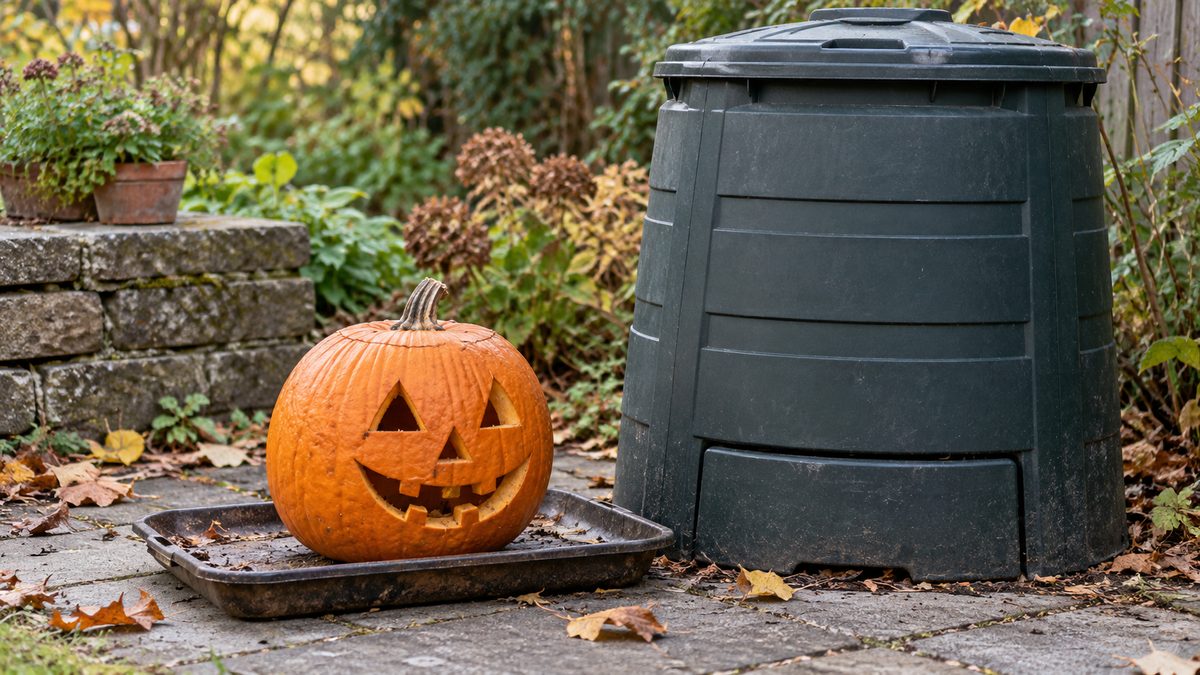
After Halloween on 31 October, remove carved pumpkins from doorsteps and gardens promptly, then use a secure compost system or a locally accepted waste collection. Do not leave pumpkin pieces scattered outdoors: exposed flesh and seeds can feed rats.
The right disposal route depends on the pumpkin's condition, any decorations and the services available where you live. Decide before carrying a soft pumpkin through the house, so it goes straight into suitable containment rather than sitting in a bag beside the back door.
End the display before it becomes a food pile
A carved pumpkin has exposed flesh and openings that give animals access. As it softens, it becomes harder to lift cleanly and more likely to leave scraps or liquid behind. A porch roof may keep rain off, but it does not make the pumpkin inaccessible to rodents.
Check displays while putting away other Halloween decorations. If a pumpkin is collapsing, leaking or mouldy, deal with it rather than waiting for every decoration to come down. Even a firm carved pumpkin needs a disposal plan once the display is finished.
Start by removing candles, candle cups, battery lights, wires, ribbons and other non-compostable pieces. Keep small batteries away from children and use the appropriate local battery collection route. Do not crush hidden electrical decorations into the food waste.
Choose the disposal route before cutting it up
| Your situation | Practical route | Check first |
|---|---|---|
| Secure home compost system | Add suitable plain pumpkin in manageable pieces | Lid, base and sides exclude rodents |
| Food-waste collection available | Use the approved closed container | Local rules for pumpkins and liners |
| Only garden-waste collection available | Ask the service if pumpkins are accepted | Food scraps may be excluded |
| Painted or heavily decorated pumpkin | Ask the waste service for disposal instructions | Coatings may rule out composting |
| No suitable collection or compost | Use the locally advised residual-waste route | Contain it and keep the bin lid closed |
Collection rules differ between councils, municipalities and private services in the UK, India and the US. Check the official local waste page or contact the collector. A green bin or compostable liner accepted elsewhere may be unsuitable for your service.
Compost pumpkin without leaving a feeding station
Use an enclosed compost system designed to resist rodent access. Inspect the lid, hinges, side openings and base before adding food. A lid on top of an otherwise open or damaged heap does not prevent access from below or through the sides.
For plain, undecorated pumpkin, cut manageable pieces if this can be done safely. Mix them into existing compost with suitable dry material such as dry leaves or plain torn cardboard, rather than leaving wet chunks on the surface. Close the lid afterwards and clear any scraps from the ground.
Adding dry material helps manage a wet load, but burying food inside compost is not a substitute for a rodent-resistant enclosure. Avoid adding the whole collection of neighbourhood pumpkins to a small bin that cannot close. Use an accepted collection route for the excess.
If your compost already has burrows, gnawing or repeated rodent activity, stop adding pumpkin and get advice on correcting the access problem. Our guide to rats in a compost bin explains what to inspect before adding more food scraps.
Move a soft pumpkin without spreading scraps
- Set a tray or sturdy container beside the pumpkin before lifting it.
- Wear gloves and support the base rather than pulling on the stalk.
- Transfer it directly to the chosen closed waste container or secure compost system.
- Collect loose seeds and flesh from the display area.
- Clean the tray and the affected surface, then wash your hands.
Do not force a knife through a collapsing pumpkin merely to make smaller pieces. Move it intact in a supporting container if that is safer. If mould or leakage is extensive, avoid unnecessary handling and use your local waste service's advice.
For suspected rodent contamination, keep people and pets clear and follow appropriate cleaning guidance. Do not dry sweep droppings with ordinary pumpkin debris. Seek a doctor's advice if someone becomes unwell after an exposure; this article does not assess health risks for an individual.
Keep the bin closed until collection
Use the correct bin and do not overfill it. A lid balanced on a pumpkin leaves food accessible, while a bag placed beside the bin can be torn. If collection is delayed, keep the waste contained in an appropriate secure container and check it for leaks.
Clean pumpkin residue from bin rims so the lid seats properly. Check the ground underneath for seeds, and avoid storing other food bags beside the container. Managing the surrounding waste matters as much as removing the display; see festive food waste and rats for the wider clean-up.
Skip the woodland drop and the open garden buffet
Do not tip pumpkins over a fence, scatter chunks in a park or leave them in woodland. Moving food away from your doorstep still leaves an accessible food source somewhere else. Follow the landowner's and local authority's waste instructions rather than treating public land as a compost area.
Leaving a pumpkin out for wildlife also makes it available to rats. If you want to understand why flesh and seeds attract attention, read can rats eat pumpkin?. For the garden itself, managing rats in the garden covers food and shelter beyond seasonal decorations.
Removing pumpkins is a useful food-control step, but it cannot establish that rats have left a property. Check for continued activity and address damaged bins, open compost and shelter if signs persist. The EchoRepel device is poison-free and uses ultrasonic sound that rats and mice want to avoid; it does not replace waste management or promise results.