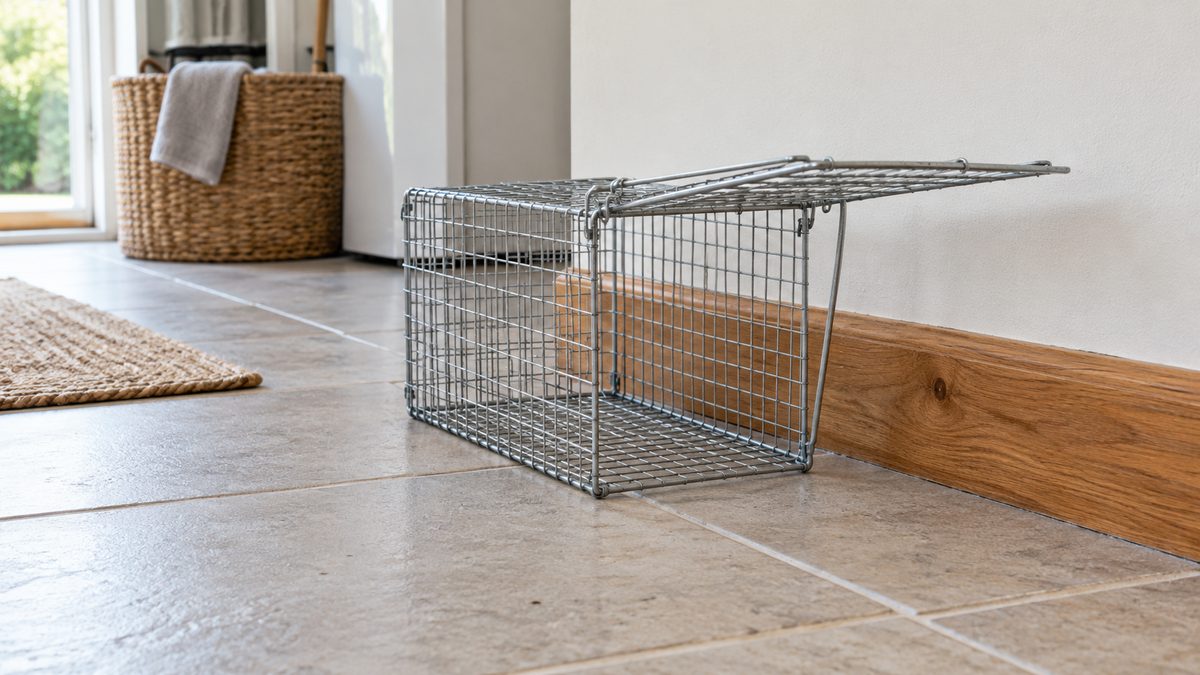
A live-catch mouse trap needs a plan before the door closes. Decide who will check it, how quickly they can respond and where to get advice about a captured animal. If everyone will be out all day, or the trap will be forgotten behind a cupboard, leave it unset.
The word humane on a packet describes an intention, not a guaranteed outcome. A trapped mouse can die quickly from stress, cold or hunger. Release can introduce further welfare problems. Prevention should be the lasting aim, with capture considered alongside entry repairs, food storage and professional advice where needed.
Choose a trap designed for mice
Small tunnel traps usually close a door when a mouse reaches a trigger. Box designs may use a similar mechanism with a larger holding space. Multiple-catch units can confine several animals and need careful monitoring of crowding and animal condition. A rat cage may have openings or a trigger unsuitable for a mouse.
| Live-catch type | What to check | Welfare concern |
|---|---|---|
| Single-catch tunnel | Ventilation, secure door and mouse-sized trigger | A small chamber can leave little room to move |
| Single-catch box | Holding space and safe inspection access | Opaque walls can hide an animal from a casual glance |
| Multiple-catch box | Capacity, mechanism and inspection instructions | Crowding and prolonged confinement require close attention |
Choose robust equipment with smooth internal surfaces and clear instructions. Test the empty mechanism as directed before use. Reject damaged doors, sharp edges or uncertain ventilation. Homemade buckets and improvised containers can cause falls, exposure or drowning; they are a poor substitute for equipment you can inspect and service safely.
Place it where you can inspect it
Look for fresh signs along skirting boards, behind stored items and near damaged food packaging. Position the entrance along a likely route using the trap instructions. Keep it level, dry and protected from direct sun, radiators, cold draughts and access by children or pets. Do not hide it somewhere you cannot reach.
Use a small amount of appropriate bait in the intended recess. Clear competing crumbs and secure food supplies rather than scattering a trail through the room. The cage-trap guide explains the wider planning issues, although mouse trapping requires mouse-sized equipment and particularly attentive welfare checks.
Check far more often than once a day
Check at least every morning, then continue frequent inspections while the trap is active. A practical welfare precaution is to check every couple of hours, following any stricter instructions or specialist advice. Morning is a minimum checkpoint, not permission to leave an animal confined until the following day.
Write down every trap location and assign one person responsibility for each checking period. Put reminders somewhere visible. If you cannot maintain checks overnight or during work, do not leave live-catch equipment active through that period. A remote notification may help, but it cannot release an animal or replace a person who can respond.
When a mouse is caught, keep children and pets away and avoid shaking or repeatedly opening the trap. Wear suitable gloves and handle the closed unit carefully. Never hold a wild mouse in your bare hands. An injured, weak or unresponsive animal needs prompt advice from a vet or wildlife welfare service.
Release distance advice varies
Common advice suggests releasing mice well away from homes to reduce immediate return, but recommendations vary. There is no single distance that guarantees either welfare or success. A mouse released into unfamiliar territory may struggle to find shelter or food and may face predators or resident animals. Driving farther does not remove those risks.
Seek local welfare advice before setting the trap, explaining where it was found and whether it appears to be a house mouse or another small mammal. Do not assume every small rodent belongs in the same habitat. Species, weather, shelter and the animal’s condition affect what a suitable next step looks like.
If release is advised, agree on a sheltered location and a prompt response plan. Avoid exposed paving, open fields in harsh weather, busy roads and locations beside another home. Get permission to access a site. Keep the trap stable during a short necessary transfer, and open it facing cover without touching or chasing the animal.
Do not keep a wild mouse as a temporary pet while searching for somewhere convenient. Nor should it be left in a car or outdoor trap to wait for better weather. If the planned release cannot happen promptly, contact the welfare adviser again rather than extending confinement.
Seal the route after removal
Catching a mouse leaves its entrance available. Inspect gaps around pipes, cupboard backs, external doors and garage connections. A mouse can use an opening about 1/4 inch (0.6 cm) across. Coordinate repairs with removal so you do not trap animals in inaccessible spaces, and preserve ventilation and drainage.
Use the room-by-room mouse prevention checklist to plan durable repairs and secure food storage. During fall (autumn), check draughty corners before colder weather encourages more shelter-seeking. Clean contamination with appropriate wet-cleanup precautions, then watch for fresh signs.
Ultrasonic repellents are supporting measures with variable results; sound does not pass through walls. Neither a deterrent nor repeated release closes a hole. If fresh activity continues, ask a pest professional to review identification, access and removal together, with animal welfare included in the plan.