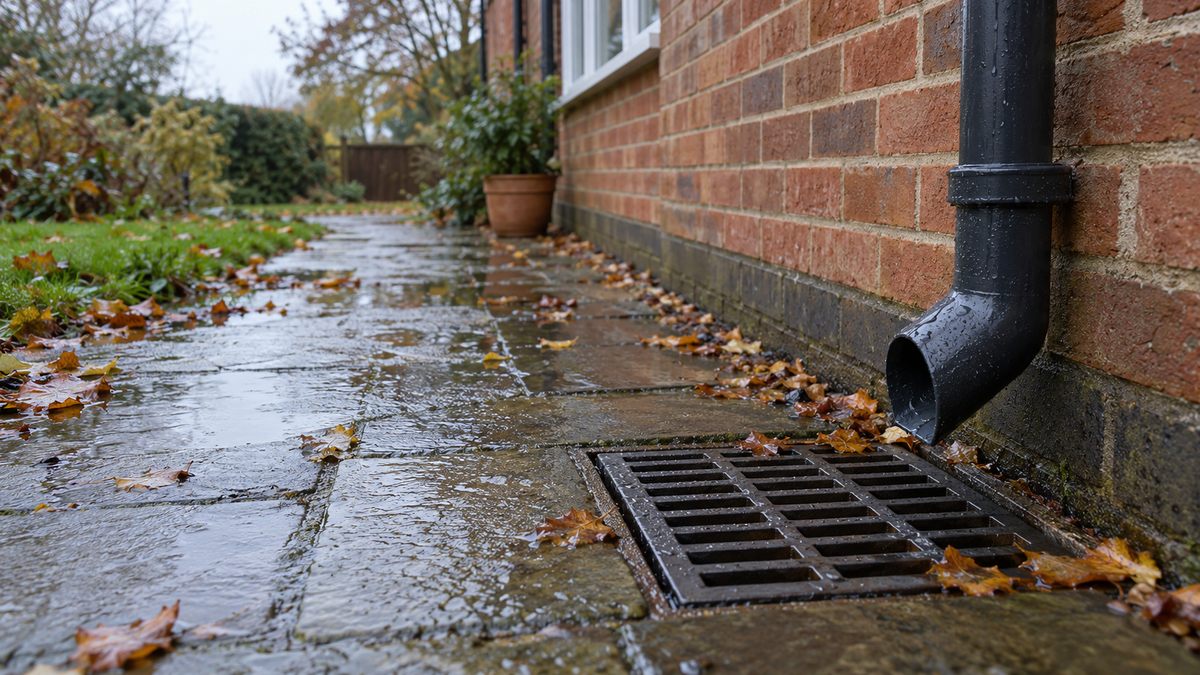
Heavy rain and rising storm water can displace rats from drains and sewers, making them more visible around homes. Once conditions are safe, check accessible drain covers, outside gullies and nearby walls for damage or repeated rodent signs. A rat beside a drain does not, by itself, prove that it came through the pipe.
In south-west England, Storm Austen brought an amber wind warning on 23 October 2026. After storm disruption, drainage checks should follow local safety advice. The same approach suits monsoon rain in India and heavy rainfall in the US: establish that the area is safe before looking for access routes.
Why a wet drain area can become a sighting point
Flooded underground spaces may force animals towards drier ground. At the same time, storm debris can create shelter beside walls and bins. Those two changes can bring a rat into view without any new defect in your own drainage system.
Look at the whole setting. A displaced lid, an exposed pipe opening and fresh signs leading towards the house deserve attention. An animal crossing a wet path once is less specific evidence. Our guide to rats after storms explains why shelter, food and building damage need checking together.
A drain can also have a long-standing fault that becomes noticeable during bad weather. Record when the problem began, but avoid assuming the rain caused every crack or blockage you find. That distinction helps a contractor decide what needs inspection.
Keep the inspection above ground
Wait until floodwater has receded and follow any restrictions from local authorities. Stay away from moving water, sewage overflow, exposed electrical equipment and unstable paving. Do not lift a heavy inspection cover, enter a chamber or reach into a drain to feel for an obstruction.
Keep children and pets away from contaminated water and open or damaged covers. If a cover is missing, prevent access from a safe position and report it to whoever maintains the area. A household check should be a visual survey from firm ground, not an attempt to explore the sewer.
What to look for between the gully and the wall
| Accessible observation | What to do next |
|---|---|
| A loose, cracked or missing surface cover | Keep people away and arrange a correctly fitted replacement without leaving the opening exposed. |
| Leaves and loose litter around a gully | Once safe, remove reachable surface debris with gloves and tools. Do not push it down the opening. |
| Water repeatedly backing up or sewage escaping | Stop the household inspection and contact a drainage professional or the responsible provider. |
| A gap where a waste pipe enters the wall | Photograph it and ask for a repair that preserves the pipe and the building’s drainage. |
| Burrowing or repeated signs beside the same pipe | Ask pest control and a drainage specialist to assess the suspected route together. |
Make notes from a fixed viewpoint so you can compare conditions after the next rainfall. Record the place, visible damage and any associated slow drainage. Avoid leaning over an opening for a closer image or testing a cover by standing on it.
A fitted cover must still let the drain do its job
Loose bricks, cloth and makeshift boards are poor substitutes for a proper cover. They may shift, hide a hazard or obstruct water. Likewise, packing mesh into an opening without understanding its function can trap debris and worsen drainage.
Ask a competent installer about the correct cover or grate for that location, including fit, loading and flow. Surface covers and underground rat barriers do different jobs. A new grate does not resolve a broken pipe beneath the ground. The guide to rats in toilets and drains describes why the route needs identifying before choosing a response.
Where a non-return valve may help, and where it cannot
A drainage non-return valve is generally intended to limit reverse flow. Some specialist barriers are designed to restrict rodent passage, but the terms do not mean every valve does both jobs. Ask the installer to explain the purpose and suitability of the proposed fitting.
Its location, pipe arrangement, access for maintenance and effect on normal discharge all matter. A fitting that catches debris, is wrongly positioned or cannot be serviced may create a drainage problem. Do not choose one solely because it appears to fit the pipe diameter.
Have a qualified drainage professional inspect persistent problems and discuss any inspection-camera survey needed. Request a clear explanation of the suspected fault, the proposed repair and the maintenance required afterwards. A valve cannot repair a collapsed pipe, close an unrelated wall gap or remove rodents already inside the building.
Check the dry side of the house too
Look at the threshold nearest the affected drain and accessible gaps around service pipes. Indoors, inspect the cupboard beneath the sink without dismantling plumbing. Droppings, gnawed packaging or repeated movement inside deserve attention even when the outside water has disappeared.
Keep food and waste contained while the drainage issue is assessed. Remove storm debris when it is safe, and avoid stacking wet cardboard against the wall. For the wider building, use the house rat-proofing guide; for signs indoors, read about rats in the bathroom.
Turn repeated signs into a useful repair report
Give the contractor a short record: where animals or signs appeared, when water backed up, which rooms are affected and what repairs have already been made. Share photographs taken safely. This is more useful than asking for every opening to be sealed before its purpose is known.
After sewage or rodent contamination, follow public-health cleaning guidance and avoid dry sweeping droppings. Extensive contamination needs professional cleaning advice. If you feel unwell after exposure to sewage, floodwater or rodent waste, contact a doctor and describe what happened. Promptly report recurring overflow rather than treating it only as a pest problem.