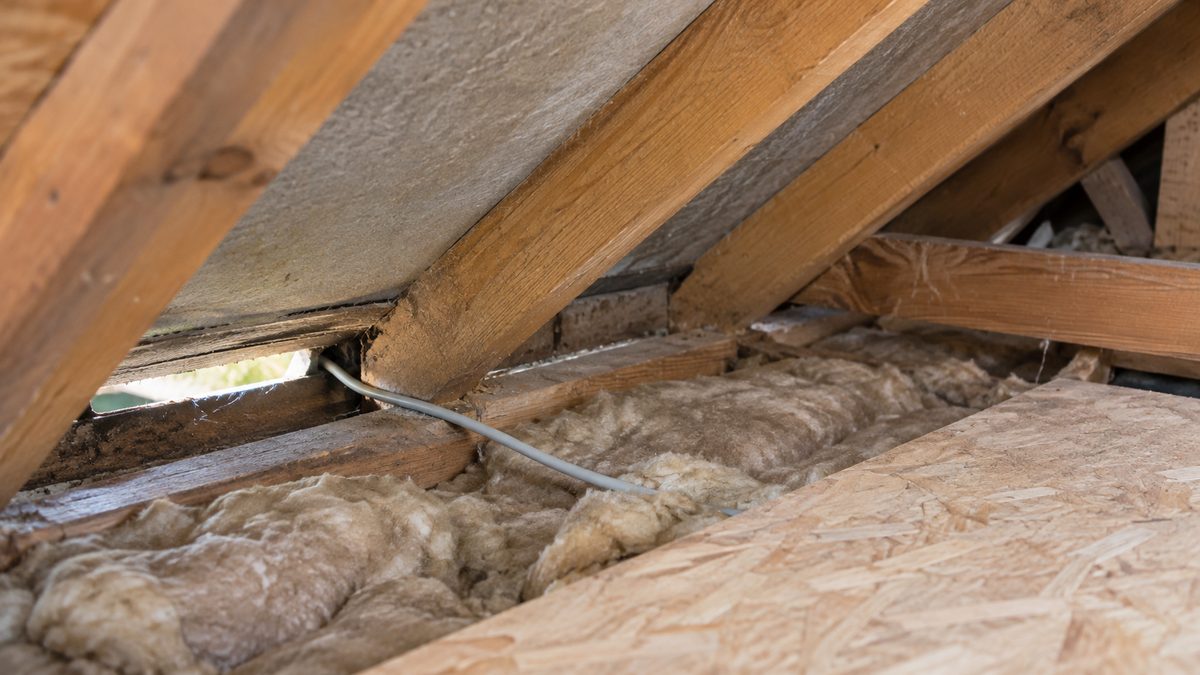
Mice get into attics through small gaps around eaves, roof junctions, cables and pipes, or by travelling upwards through wall cavities. They can enter the building at ground level and reach the loft without using an obvious hole in the roof. Finding the full route matters before you start sealing.
A loft offers quiet shelter, nesting material and access to adjoining voids. Food does not need to be stored there: mice can feed elsewhere and return. Inspect from safe positions and bring in a pest professional or roofer when the route is beyond reach.
Start below the roof as well as at the eaves
Look around external pipes, cable entries, door thresholds and damaged vents from ground level. An opening behind a utility cupboard may connect with a cavity that continues upwards. Indoors, gaps around plumbing and cable runs can provide the next stage of that journey.
Mice can climb rough surfaces and use structures as cover. A cable along a wall or vegetation touching the roof may help access, but neither is needed in every case. Our explanation of how mice climb walls helps narrow down plausible routes without assuming they can climb every surface.
Match each loft junction to a repair
| Place to inspect | What may be wrong | Repair approach |
|---|---|---|
| Eaves and soffits | Loose panels or an unprotected edge | Have damaged sections repaired while preserving ventilation |
| Cable and pipe entries | An oversized opening around a service | Use a suitable gnaw-resistant closure without damaging the service |
| Roof and wall junctions | Displaced flashing or gaps at adjoining structures | Ask a roofer to check weatherproofing and exclusion together |
| Ventilation openings | Missing or damaged protective mesh | Fit suitable protection that retains required airflow |
| Cavity connections | An internal route from lower floors | Trace the outside entry and assess safe cavity repairs |
Do not block air bricks, drainage openings or roof ventilation with solid filler. These serve the building. Where an opening also allows rodents through, the repair must retain its original function. A builder can help if you cannot distinguish ventilation from accidental damage.
Use loft evidence without disturbing insulation
Droppings along timbers, shredded stored material and chewed packaging can indicate activity. Gnawing beside a cable route deserves attention even if you have not seen a mouse. Old evidence may remain long after activity stops, so it cannot establish the timing by itself.
Check from a boarded area or the hatch with good lighting. Never step between joists or lean on the ceiling below. Do not lift insulation, move a nest or put your hand into an unseen space. Damaged wiring and extensive contamination both justify professional help.
For contaminated material, read mice droppings in loft insulation before considering removal. A domestic vacuum or dry brush can stir contaminated dust into the air. A heavily affected loft needs a plan for access, cleaning and disposal.
Decide what to seal first without trapping animals
Begin with a route map and a control plan. Close straightforward unused gaps where doing so will not confine animals, then coordinate the repair of active entrances with pest control. Simply filling the only known exit while mice remain inside may push movement into another part of the house.
- Photograph accessible gaps and mark them on a simple sketch.
- Identify fresh activity and any suspected nest before disturbing materials.
- Arrange control suited to the building, with traps inaccessible to children and pets.
- Repair damaged external junctions using materials appropriate to that surface.
- Monitor the loft and lower rooms for new evidence after repairs.
Foam alone is vulnerable to gnawing. Choose repair materials with advice from the relevant trade, particularly beside electrical services or fire barriers. Do not stuff loose metal into cable openings. A closure must be safe for both the building and its services.
Check adjoining roofs and shared walls
In terraces and flats, a loft problem may involve a shared roof void or connected service route. Ask the property manager to inspect the wider structure if your own repairs do not explain continuing signs. Repeated trapping in one loft will not repair an entrance in another part of the building.
Larger droppings or heavier noises may suggest a different animal, though sound and size guesses are unreliable. Compare the route discussion in how rats get into the loft. If bats, birds or another protected animal may be involved, obtain specialist advice before disturbing the roof.
After control and cleaning, keep stored items in sound containers and leave inspection space along accessible edges. Record where repairs were made so that a future leak, cable installation or loose soffit can be checked against the original route. Continued inspections make small repair failures easier to catch.
After any roof or broadband work, revisit the repaired junctions from a safe position. New cables can leave a previously closed opening unfinished, and a moved panel may expose a route that was absent during the first inspection.