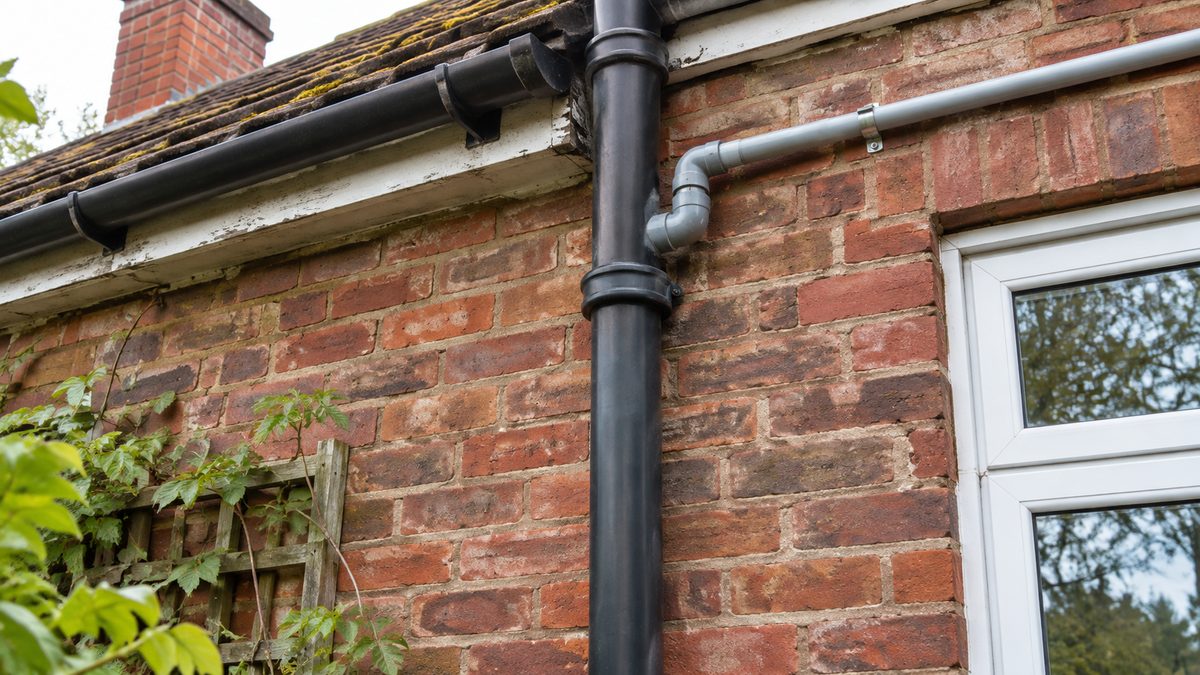
Yes, mice can climb walls when the surface gives their claws enough grip. Rough brickwork, textured masonry and routes beside pipes can take them upwards, while narrow gaps and service spaces provide other paths. Smooth, sheer surfaces are harder to climb, but a nearby cable or stacked item may offer a way around them.
This means a mouse upstairs is not proof that someone carried it in. It also means sealing only the space under the kitchen door may miss the route that matters. A useful inspection follows the connection from ground level to shelter, including hidden paths within the building.
Texture and nearby supports make the difference
Mouse claws can gain purchase on irregular surfaces. Mortar joints, rough timber and textured walls offer footholds that a clean, smooth panel may not. Where two surfaces sit close together, the space can also help an animal brace as it moves.
Do not treat a smooth cupboard face as protection for the whole cupboard. Hinges, wall gaps, pipework behind it and items leaning nearby may provide alternative access. A shelf holding food is still worth checking even when its front appears difficult to reach.
| Feature | Possible route | Inspection priority |
|---|---|---|
| Rough external brick | Climbing towards a defect higher up | Look for damaged joints and openings from a safe ground position |
| Pipe or cable run | Travel alongside it or through the surrounding gap | Check the penetration and its connection indoors |
| Stacked garden storage | A series of raised steps close to the wall | Move safe, uncontaminated storage away from openings |
| Kitchen unit void | Movement behind cupboards and along services | Inspect accessible backs and plinth edges without dismantling electrics |
| Roof edge or loft vent | Entry into sheltered roof space | Arrange a suitable inspection while preserving ventilation |
Follow upstairs signs back through the building
Start where you found evidence and note what connects to that space. A bedroom beside a bathroom may share a pipe enclosure. A loft may connect to a wall cavity, and a kitchen service route may continue through several floors. In flats, the route can extend beyond the boundaries of one home.
Look for repeated signs at these connections rather than assuming the nearest window is responsible. Photograph reachable defects, gnawed material and contamination without touching it. A drawing showing the affected rooms can help a landlord or pest professional see a pattern.
How mice enter houses covers the wider search. If evidence is concentrated above the ceiling, droppings in loft insulation explains why pulling insulation aside is not a casual inspection task.
Check high openings without climbing after mice
Use daylight and a ground-level view for external checks. Look at roof edges, junctions between extensions and older walls, and service penetrations above windows. Vegetation or stored objects close to the wall may hide defects or make upper routes easier to reach.
Do not climb onto a bin, stand on furniture beside an open loft hatch or go onto a roof to follow a suspected path. Roof edges and electrical service entries need people with the right access equipment and skills. A mouse problem does not make an unsafe ladder position acceptable.
If rodents may be using gutters or the roof edge, rodents around gutters and roofs offers related inspection context. Mouse and rat routes can overlap, but species identification and the building condition should guide the work.
Seal the opening while preserving the building's functions
- Identify what the opening serves before choosing a repair.
- Check for activity inside the connected space and plan control alongside proofing.
- Use durable, gnaw-resistant materials suitable for the surface and location.
- Have vents and service entries protected in a way that preserves required airflow and access.
- Recheck the repair and nearby routes for fresh evidence after the work.
Do not block air bricks, appliance flues, drainage openings or intended ventilation with an improvised plug. A building professional can distinguish a defect from an opening the structure needs. Around electrics, use a qualified electrician rather than pushing metal mesh into an unknown space.
Foam on its own is not a dependable answer where rodents can gnaw or push through a weak repair. The joint needs to suit the underlying material and the movement expected there. House proofing helps organise these checks across the property.
Reduce the reasons mice keep using the route
Proofing works alongside food and storage changes. Keep pet food secure, clear spills and avoid leaving edible items in open bags on high shelves. Height alone is not protection. Reorganise accessible storage so the wall edge can be checked without repeatedly moving piles.
If signs remain after repairs, revisit the route rather than adding more material at random. An adjacent gap or shared service duct may still be open. Record where fresh deposits appear after safe cleaning and ask for a coordinated inspection when activity crosses several rooms or flats.
Leave contaminated dust and nests undisturbed until there is a cleaning plan. Never dry sweep or vacuum mouse droppings. For high or concealed contamination, professional help may be needed for both safe access and removal. The task is to close a real entry route and remove the conditions supporting mice, not to make every wall impossible to climb.