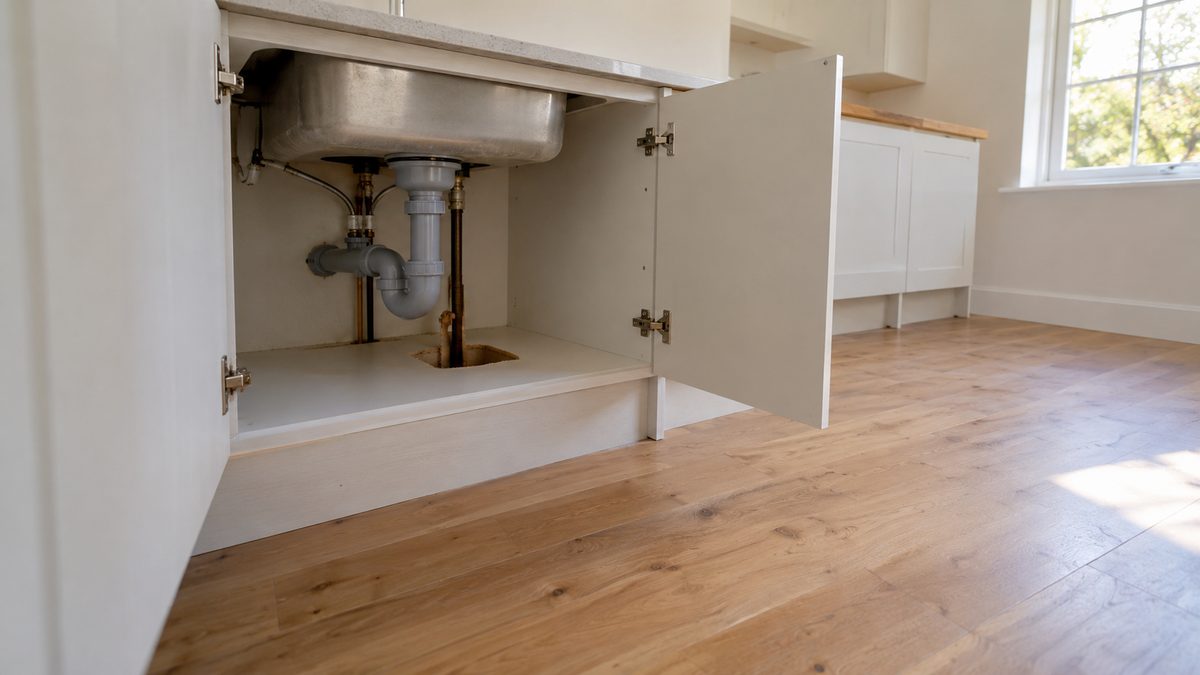
Before buying or renting, check accessible kitchens, utility spaces and outside walls for droppings, gnawing, nesting material and entry gaps. Ask permission to inspect cupboards and record anything suspicious. A viewing can identify reasons for further investigation, but it cannot certify that a house or flat is free of rodents.
Start with the building rather than one cupboard. A spotless kitchen may share a service shaft with other flats, while an untidy garden does not prove an indoor infestation. Your aim is to find evidence, understand connected spaces and ask for repairs or a specialist inspection before making a commitment.
Ask for access before the viewing begins
Request access to the under-sink cupboard, utility area, meter cupboard and any included store room or garage. For a flat, ask who manages refuse areas and shared service spaces. Bring a torch and use your phone for photographs with permission. Do not move heavy appliances or open electrical enclosures yourself.
Lofts and crawl spaces require suitable access and safe conditions. Looking from an approved access point is different from climbing onto unboarded joists. If an area cannot be inspected, write that down as an unresolved question. Do not turn a missing inspection into an assumption that the hidden space is clear.
Inspect the kitchen from pipework outwards
Look around pipes where they pass through floors and walls, then along plinths and the backs of cupboards. Check for irregular gnawing, scattered food and shredded packaging. Ask about loose panels rather than removing fitted units. Freshly fitted cupboards can conceal old routes that have not been repaired at the wall.
Use the guide to rat and mouse droppings for context, but do not touch suspected droppings or identify a species from one blurry photograph. Dark crumbs and insect debris can cause confusion. A pest professional can assess several signs together and explain how certain the identification is.
Separate observations from the promises made about them
| Observation | Useful question | Evidence to request |
|---|---|---|
| Gaps around service pipes | Where do these openings lead? | A repair plan that preserves required services |
| Traps or bait stations | Is monitoring routine or responding to activity? | Recent inspection findings and follow-up actions |
| Staining or damaged packaging | Has rodent activity been investigated? | Identification and cleaning records if available |
| Blocked access to storage | Can it be inspected before commitment? | A further visit or specialist report |
| Refuse spilling in shared areas | Who controls collection and maintenance? | A named responsible contact and planned action |
A bait station does not by itself prove that a property has a current infestation. Equally, a promise that treatment was completed does not show that entry points were closed. Ask what changed in the building and how the owner knows the activity stopped. Written answers make it easier to compare different properties.
Walk the outside route rodents could use
From publicly accessible or permitted areas, inspect the base of walls, door thresholds and service penetrations. Note broken vents, damaged drain covers, vegetation against openings and clutter around outbuildings. Do not seal anything during a viewing. Drainage, ventilation and structural repairs need appropriate assessment and permission.
Check the position and condition of bins, compost and animal-feed storage. For a ground-floor flat, look beyond the private patio to the communal boundary. A defect serving the whole building cannot always be corrected by one occupant. House rat-proofing principles help you judge the difference between a small repair and a wider building problem.
Watch for clues above the main living rooms
In accessible storage, look for disturbed insulation, chewed box corners and repeated debris along edges. Scratching reported by an existing occupant deserves follow-up, but sounds alone do not identify rats or mice. Birds, building movement and other animals can produce noises that travel through walls and ceilings.
Strong fragrance or fresh paint is not proof of concealment. Record what you observed without accusing the owner of covering up a problem. If odours or staining concern you, ask for a further visit and investigation. The article on finding possible rodent nesting areas explains why location and surrounding evidence matter.
Make unresolved rodent questions part of the decision
Before signing, list the areas inspected, those inaccessible, the evidence found and each promised action. Ask who will arrange exclusion, contamination cleaning and follow-up monitoring. Treatment without building repairs may leave an entry route available. Extensive contamination, damaged cables or inaccessible nesting calls for specialist assessment and a clear scope of work.
For a purchase, discuss material findings with your surveyor and conveyancing adviser. For a tenancy, seek local housing advice about repair duties and document agreed work. Rules differ between countries and localities, so check the official housing authority or a qualified adviser rather than assuming one universal landlord obligation.
If the viewing reveals widespread droppings, stop disturbing the area and leave cleaning to the responsible owner or professional. This is general inspection information, not a health assessment. Anyone who feels unwell after exposure should speak to a doctor. A worthwhile viewing ends with specific answers or clearly recorded uncertainties, rather than a confident guess based on a quick tour.