No, rats and mice are not the same thing. They are different rodents, and a young rat does not become a mouse simply because it is small. The distinction matters when you inspect entry points, interpret damage and choose equipment for dealing with activity.
For a householder, identification begins with a combination of clues. A quick movement behind the fridge or a single pellet on a shelf is rarely enough. Keep children and pets away from the area while you work out what has been visiting.
Compare proportions before judging size
Adult household rats are generally larger and more heavily built than house mice. Mice tend to look fine-boned, with a pointed face and ears that appear large for the head. Rats usually have a sturdier body and more substantial feet. Young animals make this comparison harder because a young rat may overlap in size with an adult mouse.
Do not approach or corner an animal to get a better view. If you already have a clear photograph from a safe distance, look at the head, feet and body together. A partly hidden tail or a distorted camera angle can give a misleading impression of scale.
| Clue | More consistent with mice | More consistent with rats |
|---|---|---|
| Overall build | Small, slender body with delicate feet | Heavier body with larger feet |
| Ears and face | Ears look prominent; face often pointed | Ears often look smaller relative to the head |
| Droppings | Generally smaller pellets | Generally larger pellets, with shape varying by species |
| Damage | Small openings and gnawed packet corners | Potentially larger gnawed openings and more substantial damage |
| Limit of the clue | Young rats can be mistaken for mice | A large dropping alone cannot identify a species |
Tail proportions also vary between rodent species. Our page on whether mice have long tails explains why the tail belongs in a wider comparison rather than serving as a single deciding feature.
Read the evidence around food and shelter
Both animals need food, water and shelter. Mice can settle close to food cupboards, appliances and stored fabrics. Rats may use sheltered runs, garden structures, roof spaces or service routes. These are tendencies, not rules: finding an animal upstairs does not make it a mouse, and finding a burrow outside does not identify every rodent indoors.
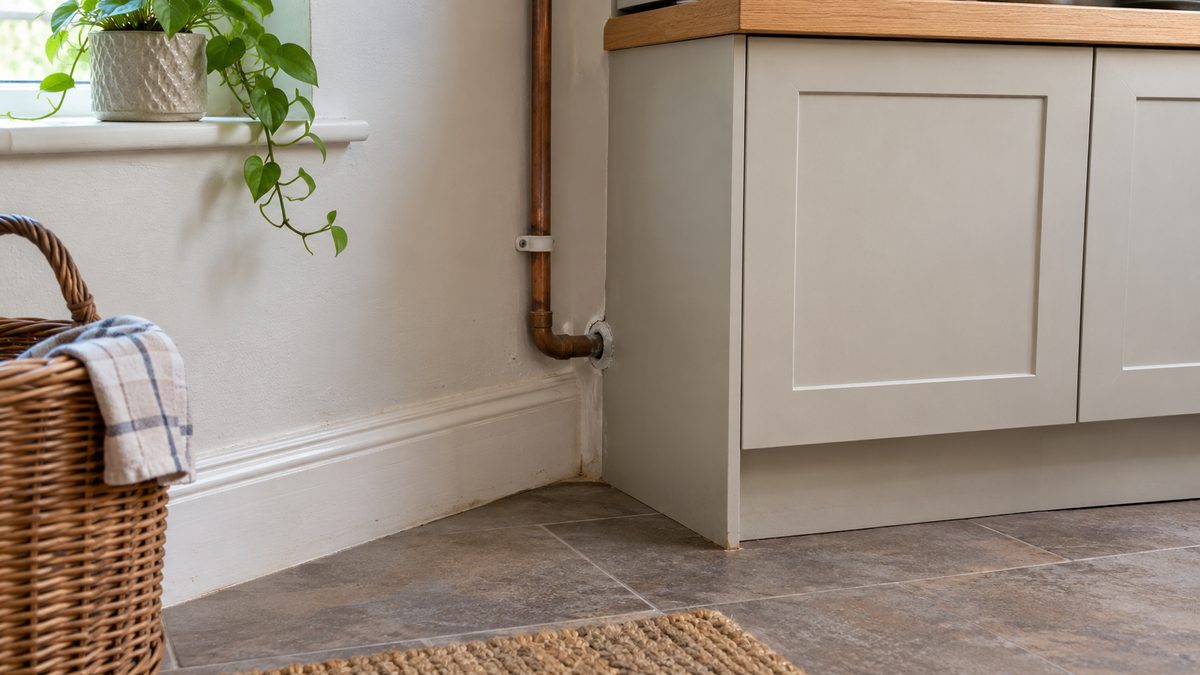
Check the edges of rooms, around pipe penetrations and behind accessible storage. Look for damaged packaging, shredded material and repeated deposits in the same area. Avoid pulling apart a suspected nest. Disturbing it can spread contamination and send hidden animals into other parts of the building.
Droppings are useful evidence but unsafe objects to handle. Their apparent size can change as they dry or break. Compare photographs and the surrounding signs using rat droppings versus mouse droppings, then ask a pest professional if the identification remains uncertain.
Why the distinction changes your next job
A mouse can exploit a smaller opening than a larger rat, so an inspection that considers only obvious holes can miss mouse entry. Look closely around cables, cupboard backs and door edges, as well as larger defects in the building fabric. Do not assume an opening is harmless because it looks too small for the animal you imagined.
Control equipment also needs to suit the target animal and location. A trap intended for a mouse is not interchangeable with one designed for a rat. Follow the equipment instructions and keep it inaccessible to children and pets. If you cannot do that safely, use a professional rather than improvising a placement.
Identification can also reveal a wider building issue. Activity across several flats, shared roof spaces or service ducts needs a coordinated inspection. Treating one cupboard while an adjoining void remains accessible can leave the underlying route untouched.
A practical inspection without chasing the animal
- Record where you saw movement or found damage, including the room and nearby pipework.
- Photograph signs from a distance without brushing droppings aside.
- Put accessible food and pet food into secure containers and clear spilled feed.
- Inspect reachable door edges and service openings using a torch; leave high or enclosed spaces to someone equipped for them.
- Arrange a suitable control and proofing plan before closing routes around an occupied cavity.
Use how mice get into a house to organise the entry inspection. For larger outdoor signs, include bins, stored materials and the base of sheds, rather than checking only the kitchen where food damage appeared.
Clean safely even while identification is uncertain
You do not need a confirmed species to avoid unsafe cleaning. Do not sweep or vacuum rodent droppings, urine or nests. Wet disinfection is the safer approach described in cleaning mouse droppings. If contamination is extensive or hidden in insulation, get professional advice before moving materials.
Fresh evidence after cleaning is more useful than guessing how long an old deposit has been there. Note the cleaned locations and check accessible areas again without scattering flour or other food as a tracking aid. Continued droppings, fresh gnawing or sightings in several rooms justify further investigation.
The home device described below uses ultrasonic sound that rats and mice want to avoid and is poison-free. It does not identify the animal, remove a nest or close an entry hole. Keep the focus on the evidence, food storage and repairs appropriate to the building.