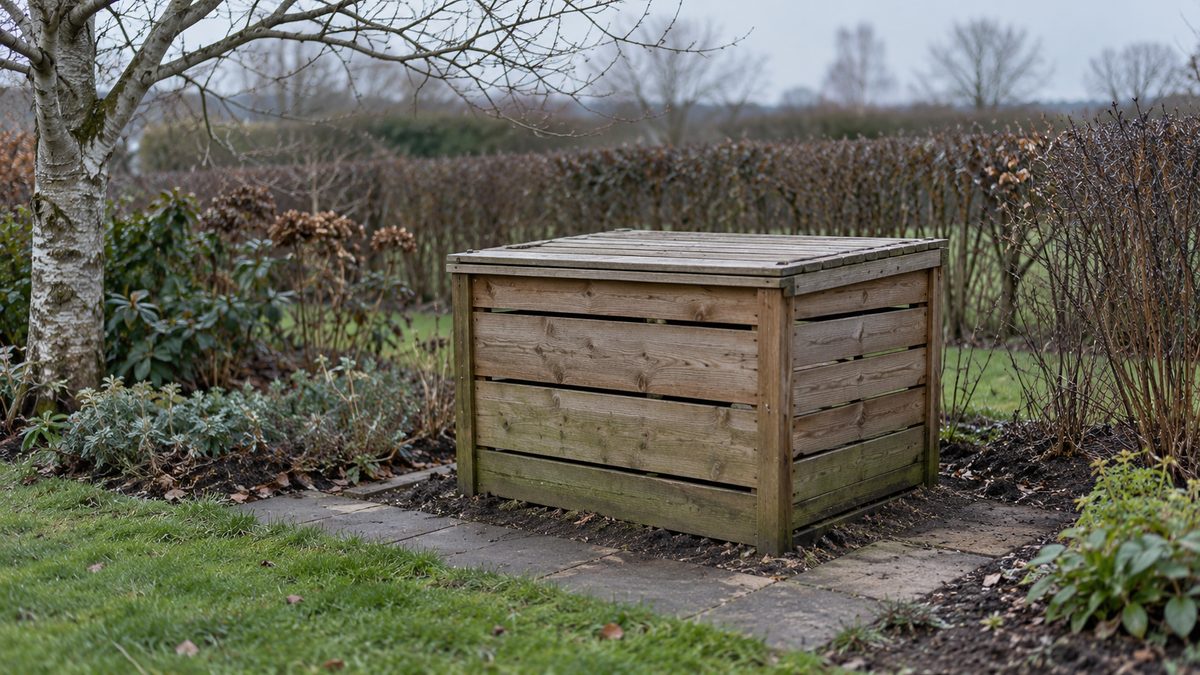
A compost heap can shelter rats in winter if it combines cover with accessible food. Check what goes into it, how animals could reach the contents and what is stored around it. If you find suspected burrows or nesting material, pause disturbance and get an assessment before turning the heap.
Cold weather does not make every compost bin attractive to rats, and a warm heap is not evidence of an infestation. Decomposition can produce warmth without any animal activity. Look for a pattern of signs and nearby food sources rather than blaming the compost solely because it is the warmest-looking corner of the garden.
Work out what the heap is supplying
Food scraps exposed at the surface are easy to reach. Loose lids, damaged sides and gaps around the base may allow access even when the top looks secure. Thick cover from old boards, tarpaulins or overgrown vegetation beside the bin can also make movement less visible.
Look at nearby bird feeding, pet-food storage and refuse. A rat may travel through the compost area while feeding elsewhere, or use a quiet base beneath it. Our general article on rats in compost bins helps you assess the bin alongside the rest of the plot.
Adjust winter inputs before adding another layer
For an ordinary garden heap, avoid adding meat, fish, dairy, oily cooked leftovers or pet waste. Specialist systems have different instructions, so follow the guidance for the system you own. Do not assume that an enclosed appearance means any food waste can go inside without attracting animals.
Even suitable uncooked fruit and vegetable scraps can provide food if left exposed. Add them in manageable amounts and mix or cover them with appropriate compost material when it is safe to handle the heap. A blanket of dry leaves is not a rodent barrier, so this step cannot replace repairs or investigation of activity.
A winter inspection that leaves suspected nests alone
- Inspect the outside first. In daylight, look at the lid, walls and ground around the base without reaching beneath the bin.
- Note soil disturbance. Photograph holes, worn routes and displaced earth, recording their position relative to the heap.
- Look for additional evidence. Gnawing, droppings and repeated food disturbance are more informative together than an isolated hole.
- Remove nearby food access. Secure ordinary refuse and spilled feed without disturbing suspect contaminated areas.
- Check the bin specification. Review suitable base protection, lid fittings and drainage for that particular design.
- Arrange help for active signs. Have suspected nesting or burrows assessed before dismantling, moving or turning the heap.
Keep children and pets away from suspected activity while you decide what to do. Do not push a hand, pole or hose into a hole to find out what is inside. Flooding, smoke and improvised chemicals can harm other animals and create hazards without resolving the food and shelter problem.
Improve the base without creating a drainage problem
Some bins can use securely fitted, durable metal protection at the base, but suitability depends on design and installation. Ask the supplier or a pest professional about a compatible barrier. Loose mesh laid beside a gap does not protect the contents, and exposed sharp edges create a handling risk.
Keep required drainage and ventilation working. Do not pour concrete around an occupied burrow or fill every opening without understanding the route. Rodents may use connected spaces beneath paving or a shed, so the visible compost-side hole can be only one part of the issue. Recognising garden burrows explains the uncertainty.
Make the compost corner easier to see
Remove unused bags, stacked empty pots and loose rubbish where safe to do so. Keep an inspection gap around the bin and trim vegetation enough to see its base. Store animal feed securely and review bird feeding if spilled seed repeatedly collects nearby. Do not move a suspected occupied bin next to the house for convenience.
Compost management in winter can be slower and less frequent than in warmer conditions. Plan a brief visual check even when you are not adding material. After wind or heavy rain, check for a shifted lid, damaged panel or waste blown from nearby bins. These events can change access without leaving obvious signs at the top.
Know when the heap needs professional handling
Repeated droppings, fresh soil disturbance, sightings near the kitchen door or signs beneath adjoining structures justify professional advice. Ask for identification, a plan for the surrounding food sources and an explanation of when exclusion repairs should happen. Simply turning the heap can disturb animals or contaminated material without stopping the next visit.
For small accessible patches of suspected waste, follow current public-health guidance and avoid dry sweeping or vacuuming. Large contaminated heaps are a different task from wiping a hard surface. Tell the professional what material is present and how you normally use the compost. Seek medical advice if illness develops after possible rodent exposure.
The guide to rats in the wider garden can help you coordinate changes beyond the bin. Keep a dated record of repairs and new signs. Progress is better judged by repeated observations after food and access changes than by assuming one tidy afternoon has made the heap unsuitable for nesting.