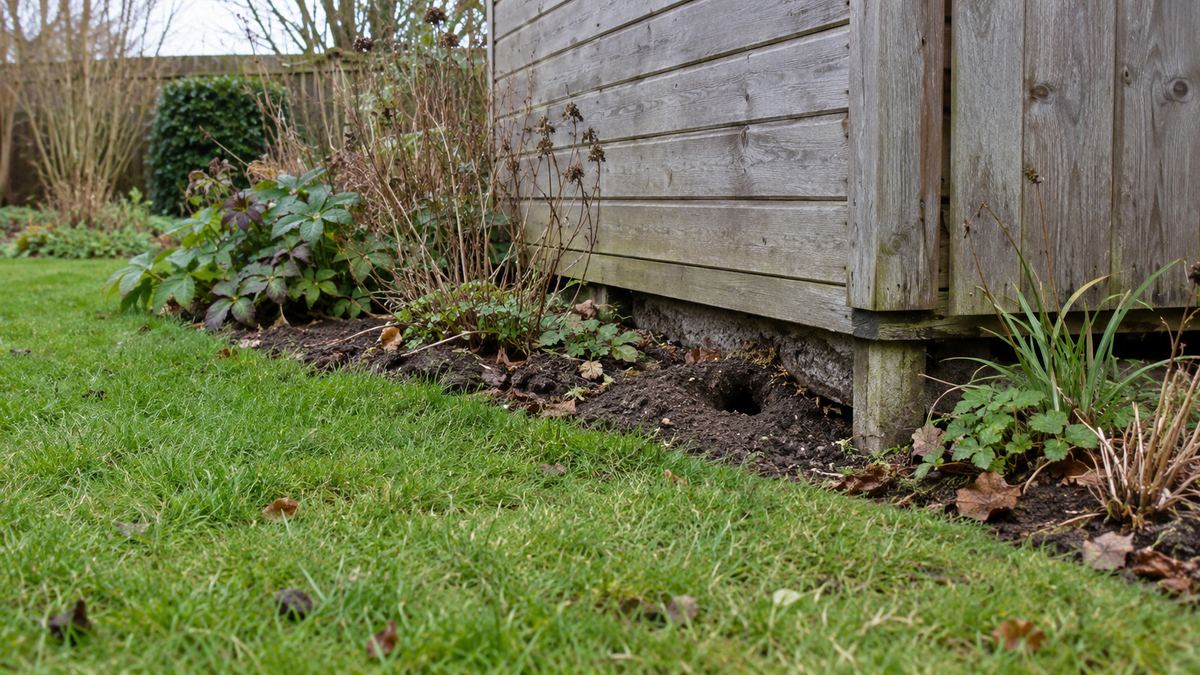
A hole in a lawn or border may be a rat burrow, but its shape alone is not enough to identify it. Look for repeated soil disturbance, worn routes, droppings and nearby food or shelter. Do not fill, flood or probe a suspected occupied hole before the animal and the wider route have been assessed.
Gardens support many animals, and holes can also result from weather, drainage defects or collapsed ground. Treat the first discovery as an inspection question. Photograph it from a safe position and note what lies nearby, especially sheds, compost, feed storage and the base of walls.
Read the ground around the opening
Possible rat activity can include a clear route along an edge, earth moved near an entrance and signs around a sheltered structure. None of these is conclusive in isolation. Fresh-looking soil may have been exposed by rain, and old holes can be reused by different animals.
Look from the surface without putting fingers or tools inside. Check accessible surrounding ground for gnawed materials or waste, but avoid touching suspected droppings. Comparing rat and mouse droppings offers context without replacing identification by someone who can inspect the full set of signs.
Compare a possible burrow with other garden damage
| Feature | What it can tell you | What it cannot establish |
|---|---|---|
| Opening beside a shed or fence | The site offers cover worth checking | Which animal made it |
| Repeatedly disturbed soil | Something may still be using the area | The age or full extent of a tunnel |
| Worn path towards feed or compost | A possible travel route links resources | That every nearby hole belongs to the same animal |
| Droppings and gnawing nearby | Additional evidence can support rodent identification | A reliable count of animals present |
| Sunken paving or a widening depression | The ground needs a safety assessment | That rodents caused the structural problem |
Avoid relying on a fixed hole diameter as a diagnosis. Entrances change with soil, erosion and use, and several animals can leave superficially similar openings. If identification affects what you do next, seek a pest or wildlife professional rather than choosing a treatment from a photograph alone.
Remove accessible food while leaving the opening undisturbed
Secure refuse lids and clean ordinary food spills where there is no suspect contamination. Bring pet food indoors after feeding and store bulk feed in sound, closed containers. Review bird feeding if seed repeatedly reaches the ground. Reducing food access helps address the surrounding conditions even while identification is pending.
Check fallen fruit and compost inputs too. Do not tip leftovers into a garden corner as a temporary measure. The guides to managing bird-feeder spill and winter compost checks can help you trace resources that are easy to overlook from the back door.
Keep people away from unstable or contaminated patches
Mark a safe boundary around loose paving or sinking ground and keep children and pets away. Do not stamp over the hole to collapse it, especially near buried services or a structure. A visible opening does not show how far any void extends or whether the surface above it can support weight.
Never use smoke, fire, fuel, exhaust fumes or household chemicals to drive an animal out. Flooding can spread contamination, affect foundations and harm other wildlife. If anyone is bitten or scratched, wash the wound and seek prompt medical advice; for illness after contact with suspect waste, describe the exposure to a doctor.
Ask what connects the border to the building
A burrow beside a shed may be connected with shelter beneath its floor. Check accessible perimeter gaps without lifting heavy boards or crawling underneath. Near the house, note damaged vents, service holes and drainage defects. Do not block required airflow or assume that filling the soil opening repairs the building route.
In communal gardens, tell the managing agent or responsible owner where the evidence lies. A route may cross several boundaries, so isolated action can miss the food source or main shelter. Rats under sheds and decking explains why concealed structures often need a wider inspection.
Repair the site after the activity has been addressed
Ask the professional how they will identify the animal, assess activity and decide when holes can be closed safely. If rats are confirmed, the plan should cover food, shelter, suitable control and building exclusion. Treatment options and wildlife protections vary, so check local official guidance instead of assuming the same method is allowed everywhere.
Once the area has been assessed and any occupied route handled appropriately, arrange suitable backfilling or structural repair. A damaged drain or unstable path may need its own tradesperson. Keep photographs of the original area and compare later checks after rain or gardening, when changes are easier to confuse with renewed digging.
For the surrounding plot, managing rats in a garden sets out a broader prevention approach. A successful repair leaves the site safe and inspectable and removes the conditions supporting repeated use. An opening covered by a flowerpot may be out of sight, but it leaves the identification and access questions unanswered.