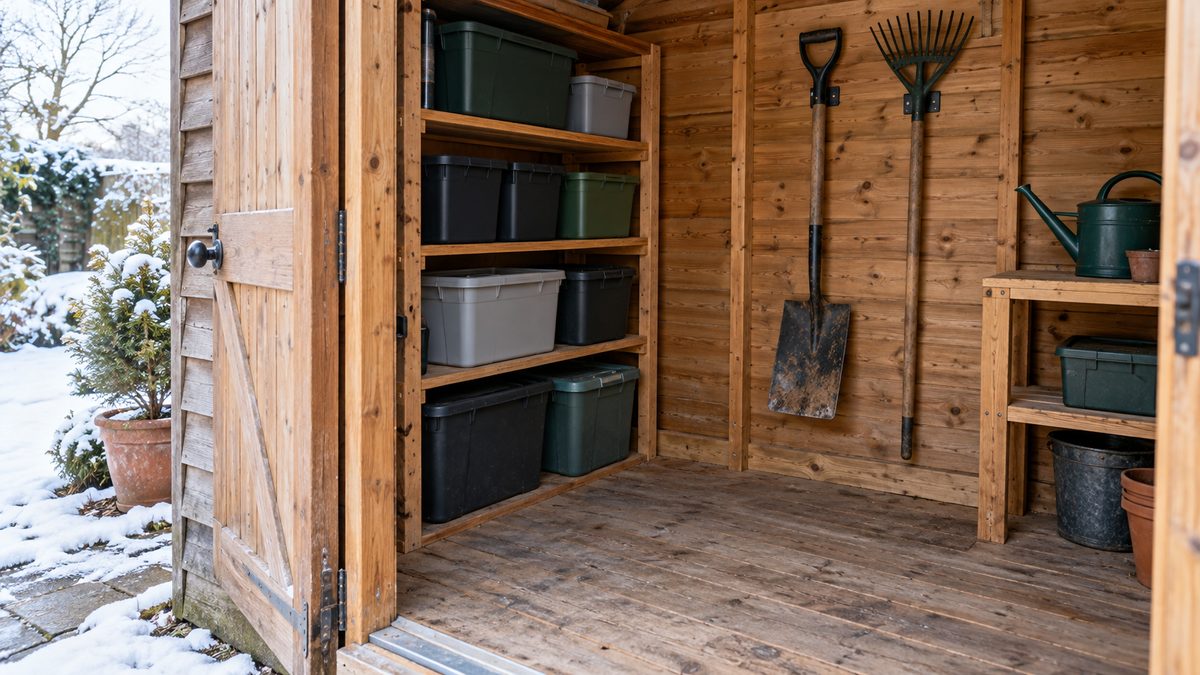
Rat-proof a shed or garage by removing food, checking for activity and repairing the building with suitable durable materials. Work from the floor and door edges to service openings and roof joints, while preserving ventilation and drainage. If rodents appear to be inside already, arrange their removal before sealing an active route.
Begin with a walk around the empty edges
You do not need to put every possession on the lawn to start. Clear a working strip along accessible walls, keeping a path to the door. Look behind the first row of stored items with a torch before moving deeper stacks.
Record droppings, gnawed packaging, gathered bedding and holes separately. A gap is a repair opportunity; it is not proof that rats are using it. Fresh signs clustered around one corner deserve a closer assessment before you close the opening.
In a garage, leave vehicle access and escape routes clear. Do not move heavy shelving alone or disturb damaged electrical fittings. Check the roof only from a safe ground position and use a professional for work beyond safe reach.
Move food out of the storage pattern
Grass seed, bird feed, pet food and discarded snacks can sustain repeated visits. Put sound supplies in rigid, close-fitting containers suitable for their contents. A folded paper sack on a high shelf is still accessible to climbing rodents.
Clean spilled seed from shelf joints and beneath containers. Do not keep contaminated food because the outer bag still looks mostly intact. If packaging has been gnawed or fouled, isolate it and follow suitable disposal advice.
The guide to pet food attracting rats covers feeding and storage habits. Deal with this before investing time in a door repair, otherwise an open sack next to the entrance continues to reward visits.
Repair the shell in a sensible order
- Check the base for rotten boards, broken masonry and gaps where the wall meets the floor.
- Inspect the closed door from inside if access is safe, looking for daylight at the bottom and sides.
- Examine pipe and cable entries, choosing repairs compatible with the service rather than packing material against live wiring.
- Check vents and grilles for damage while keeping their designed free airflow.
- Arrange repairs to loose roof edges, cladding and gutter-related water damage.
- Recheck after opening and closing doors to make sure the repairs still fit.
Use materials suited to the building, weather exposure and gnawing risk. Metal protection can help vulnerable edges, but sharp exposed ends need finishing safely. Do not rely on soft filler alone where rodents can chew it.
A garage may require ventilation for its equipment or construction. Never seal an air brick, combustion vent or drain just because it looks like a possible entry point. Ask an appropriate tradesperson about a protective grille that preserves its function.
Check occupancy before closing a working route
If an opening has fresh droppings, rub marks or repeated movement, pause that repair and seek pest advice. Closing the outside while animals remain inside can redirect them into less accessible spaces.
A professional can assess active routes and coordinate control with proofing. Tell them about stored food, pets and any shared walls. Avoid setting loose poison or traps where children, pets or non-target wildlife could reach them.
For roof-level activity, see rats in a shed roof. Scratching above the storage area may need a different access plan from a hole beside the door.
Clean contamination before arranging the shelves
Do not sweep or vacuum dry droppings, and do not shake out a nest. Keep other people away while you assess the affected area. Small accessible patches can be wetted with a suitable disinfectant used according to its label, then lifted with disposable towels while wearing gloves.
Bag waste appropriately, clean reusable hard surfaces and wash hands after removing gloves. Leave electrical components dry and use a professional for contaminated wiring or inaccessible voids. Widespread fouling, strong odour or damaged insulation may require specialist cleaning.
Our instructions for cleaning a shed after mice are useful before you restock. If you become unwell after exposure, contact a doctor and describe what happened.
Restock so the next check is easy
Use stable shelving and rigid lidded boxes where practical. Leave enough visible floor and wall space to notice new droppings. Do not create a narrow, hidden corridor behind a wall of bags and cardboard.
Hang suitable tools securely instead of leaning a tangled bundle in a corner. Store fabric covers clean and dry. Keep firewood in an orderly, inspectable arrangement rather than mixing logs, compost sacks and spare timber under one sheet.
Photograph the clean corners and repaired openings. Check them after severe weather, deliveries and periods when the shed has remained unused. New signs matter more than an old stain that was already recorded.
A door that starts sticking can indicate a repair has shifted or the surrounding timber has deteriorated. Fix the cause rather than cutting a larger clearance without considering rodent access. In a rented or shared garage, report structural defects to the responsible owner.