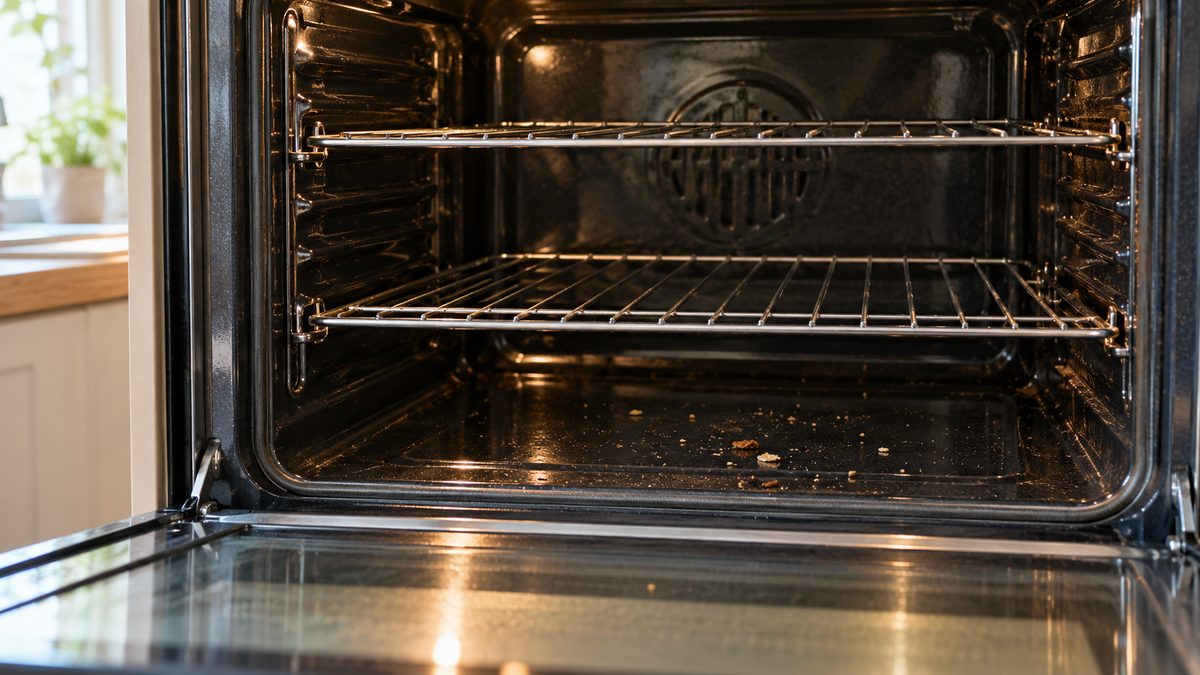
Finding mouse droppings in the grill pan, shredded paper in the storage drawer, or a strange smell when the oven heats up is common in autumn and winter. A cooker is warm, sits next to food and has insulation and gaps behind it that make good shelter. The fix is to make the oven safe first, then clean it properly, then block the route the mouse used.
First, make it safe
- Switch the oven off at the wall or at the cooker switch, and turn off the gas supply to the cooker if you are going to look behind it.
- Do not heat the oven to drive a mouse out. A nest or a trapped mouse inside can create a fire risk and a strong smell.
- Open the oven and storage drawer slowly and look with a torch. If a mouse is inside, step back, open an outside door and keep pets away.
- Check the cable at the back of an electric cooker for chewing. If you see damage, do not use the cooker until a qualified electrician or engineer has checked it.
Signs a mouse has been in the oven
- Small, dark droppings in the grill pan, oven floor or storage drawer.
- Shredded paper, foil or insulation pulled into a soft ball.
- A musty or burning smell when the oven warms up.
- Gnawed packaging in the cupboard next to the cooker.
- Scratching sounds behind the cooker at night.
Not sure if it is mice or rats? Size helps: our guide to rat and mouse droppings shows the difference.
How to clean the oven safely
Mouse droppings and urine can carry germs, so avoid stirring up dust.
- Ventilate the kitchen and wear rubber or disposable gloves.
- Spray droppings and nesting material with disinfectant and leave it to soak as the label directs.
- Wipe everything up with paper towels and seal it in a bag for the bin. Do not vacuum or sweep dry droppings.
- Remove the shelves, grill pan and trays and wash them in hot soapy water.
- Clean the inside of the oven following the manufacturer's instructions, especially for self-cleaning or coated linings.
- Empty and wash the storage drawer, and throw away any oven gloves or cloths that were soiled.
- Wash your hands thoroughly when you finish.
Our guide to cleaning mouse droppings explains the method in more detail.
Find the way in
Mice usually reach the oven from behind the kitchen units, not through the front. Common routes are:
| Route | How to block it |
|---|---|
| Gaps where pipes and cables enter through walls | Pack with steel wool and seal over it |
| Open backs of kitchen units | Fit back panels or mesh |
| Gaps under the kickboards | Refit or replace loose kickboards |
| Air bricks or vents behind units | Cover with fine metal mesh, keeping ventilation |
| Gaps around the gas pipe | Ask a qualified gas engineer to seal around it |
Never move or disconnect a gas cooker yourself. Ask a qualified gas engineer. A mouse can use a gap about the width of a pencil, as our guide on gap sizes explains.
Stop it coming back
- Clean the oven floor and grill pan after cooking; grease and crumbs are food.
- Wipe the hob and the gap between the cooker and the counter.
- Keep dry food in sealed containers. See mice in the pantry.
- Empty the kitchen bin every night in cold months.
- Check behind the cooker every few weeks over winter.
When to get help
If you find chewed cables or insulation, ask a qualified engineer to check the cooker before using it. If droppings keep appearing after cleaning and sealing, or you see signs in other rooms, call a pest controller. Autumn is when many mice move indoors, as our article on why mice come inside in autumn explains.
In short
Switch the oven off and never heat it to drive a mouse out. Clean droppings wet, wash every removable part, and check cables for damage. Then block the gaps behind the units, keep the oven free of crumbs and grease, and store food sealed.
For the kitchen, the EchoRepel Ultrasonic Rat Repellent adds a poison-free layer, filling the space with ultrasonic sound that rats and mice want to avoid.