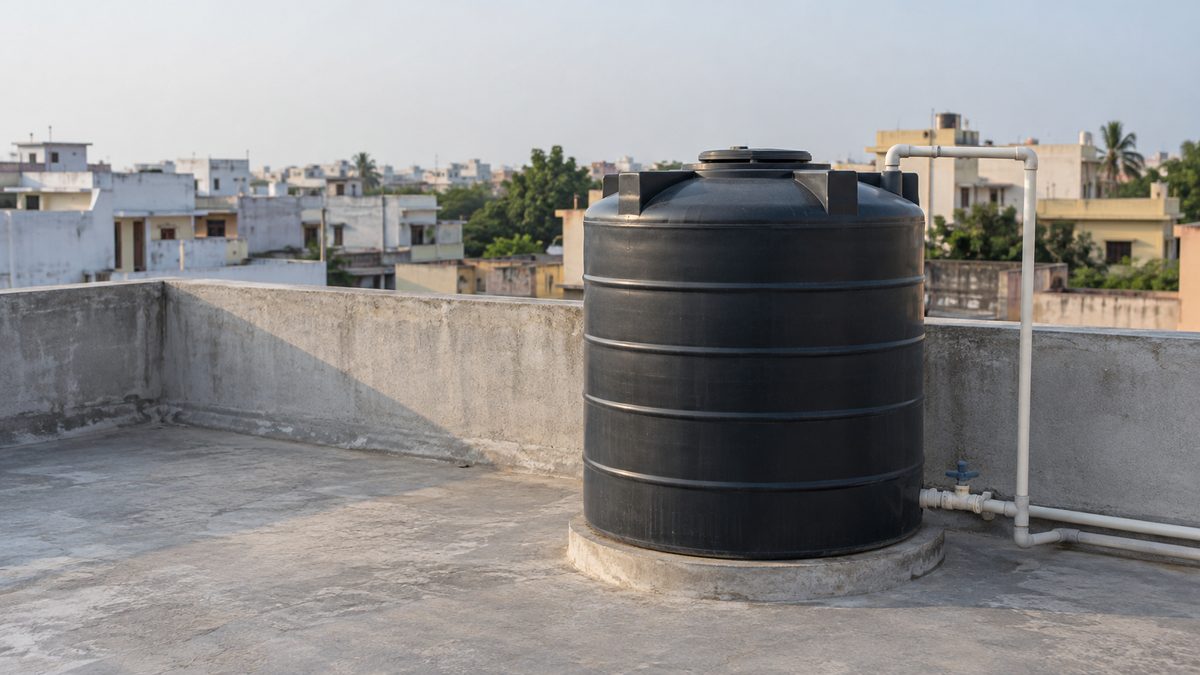
Rats near a water tank do not automatically mean the water is contaminated, but damaged covers, open access points or evidence inside the tank need prompt professional attention. If contamination is suspected, stop using that supply for drinking, cooking, brushing teeth and food preparation, and obtain advice from the water supplier or local public-health authority.
Use an alternative known-safe water supply while the situation is assessed. Do not judge safety by clear water or the absence of a smell. Tank cleaning, disinfection and decisions about returning water to use should follow qualified advice for the particular system and local conditions.
Distinguish nearby activity from an exposed supply
Droppings on a rooftop path or gnawing around stored materials show a reason to investigate the surroundings. They do not establish that an intact, sealed tank has been breached. Record where the signs are in relation to the cover, pipes and maintenance access without touching waste.
A displaced lid, damaged hatch or visible material inside the tank is a different situation. Keep people away and report it promptly. Do not lean over an opening for a closer photograph or use a household utensil to retrieve anything. Introducing tools or hands can add contamination and create a fall risk.
For a shared building, tell management which water supply may be affected and ask for an authorised inspection. If a tank serves drinking water and other uses, the response needs to account for those connections. Residents should receive clear instructions from the responsible manager or water professional rather than separate guesses about what is safe.
Inspect covers and routes from a safe position
Rooftop access must be safe before any pest inspection begins. Avoid unprotected edges, wet surfaces and climbing onto the tank itself. A lid is not a standing platform. Underground tank covers can also be heavy or damaged; lifting one without the right equipment risks injury and exposes an opening.
- Check visually that the cover is present, seated and free of obvious damage.
- Report broken fastenings or a hatch that cannot close securely.
- Note gaps around pipe entries without disturbing fittings.
- Ask a qualified contractor to inspect vents and overflow protection.
- Look for leaks, standing water and waste around the tank base.
- Keep stored bags, rubbish and food away from the access area.
- Record any evidence inside the tank for an urgent professional response.
Vents and overflows need to function while excluding unwanted entry as the system design requires. Do not stuff cloth, foam or loose mesh into them. Any replacement screening or cover must suit the tank, remain maintainable and avoid obstructing water flow or ventilation. Ask the installer what is appropriate rather than choosing material solely because it looks difficult to chew.
Report a suspected contamination event clearly
Contact the water supplier, building manager or a qualified water-system contractor as appropriate to the property. Explain the observations, which tank is involved and what the water is used for. If there is evidence of an animal or waste inside, state that directly so the response is not treated as routine exterior pest control.
Ask for instructions on avoiding exposure, supplying safe water and notifying other users. Do not assume that turning one tap off isolates every outlet. The contractor needs to understand connected pipework, pumps and any treatment equipment before deciding the scope of action.
This is general safety information. If anyone develops illness after using suspect water, seek medical advice and mention the possible exposure. Symptoms do not identify the cause on their own. People who are medically vulnerable should obtain advice promptly rather than wait for a household cleaning attempt to solve the uncertainty.
Leave tank cleaning and return-to-use decisions to specialists
Do not enter a rooftop or underground tank. Confined-space hazards can exist even when it looks empty, and improvised rescue attempts can endanger another person. A suitable contractor must plan access, isolation, cleaning and safe handling of any contaminated material.
Avoid pouring in household disinfectant using a guessed amount. Treatment depends on the tank, water and contamination, and the connected system may also need attention. Cleaning the visible wall alone does not establish that stored water or downstream pipework is suitable for use.
Ask how the contractor will confirm readiness for service and whether sampling or further work is required under local guidance. Boiling water is not a universal answer to every possible contamination, so follow the authority's instructions rather than treating one household method as a complete clearance decision.
Remove the reasons rodents linger around the tank
Repair leaks and keep the surrounding area clear enough for routine inspection. Secure nearby rubbish and food waste, and avoid leaving bird feed or pet food on roofs and terraces. Vegetation, stored materials and service routes can provide cover on the approach, even where the tank itself is properly sealed.
Coordinate pest removal with repairs so that animals are not simply trapped in an adjacent service void. The guide to rats in gutters and roofs covers access above ground level. For the surrounding property, rats in the garden and rodents in apartment buildings explain how food and shared spaces can sustain activity.
Keep maintenance records showing cover repairs, leak checks and any professional cleaning. For rodent deterrence, the EchoRepel Ultrasonic Rat Repellent uses ultrasonic sound that rats and mice want to avoid and is poison-free. It cannot disinfect water, protect an open tank from contamination or guarantee results.