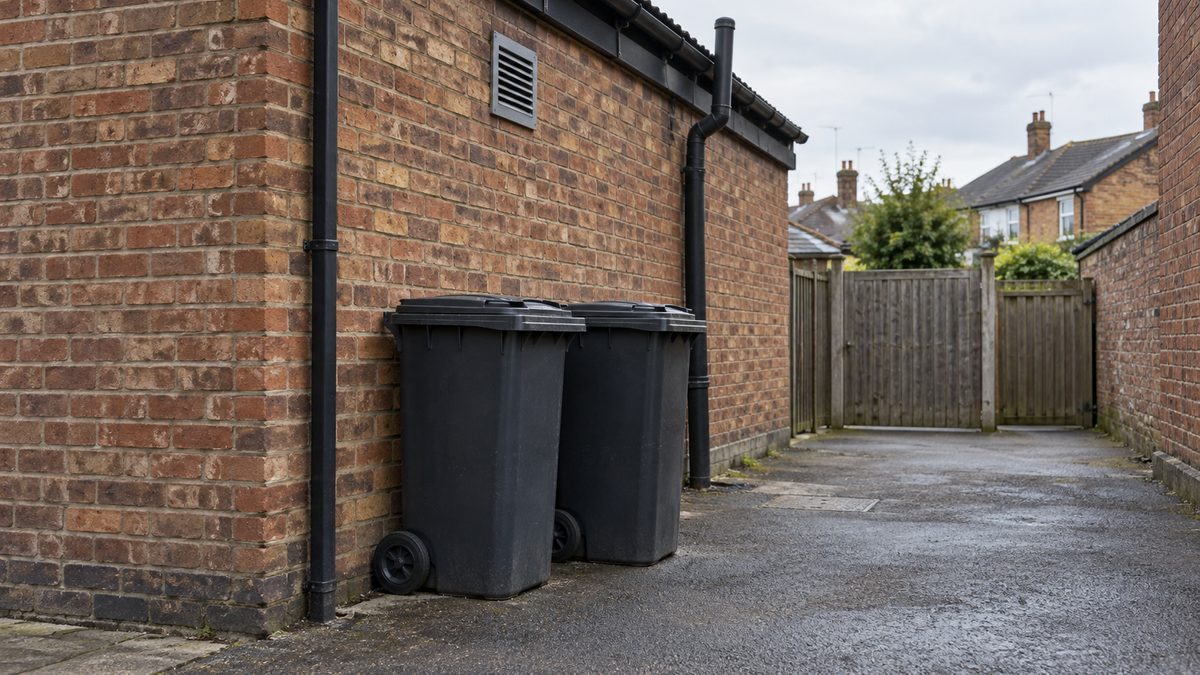
Living near a restaurant or takeaway can mean more opportunities for rats if food waste, water and sheltered routes are available. Proximity alone does not prove a particular business caused the problem. Protect your own building, record what you can see from lawful access and report persistent waste or rodent activity to the responsible manager or local authority.
Look at the waste route rather than the menu
Rats respond to accessible resources. An overflowing bin, a torn refuse sack or food caught beneath a container can provide food outside any type of kitchen. A clean, well-managed food business may offer less attraction than an open domestic compost heap nearby.
Delivery areas can also accumulate cardboard and sheltered gaps. A narrow alley with stored materials may connect a commercial yard to residential gardens. The useful question is where food and cover remain accessible, rather than which cuisine is being prepared.
Watch for recurring conditions from your own property or public areas. Note the location and time of sightings, where animals disappear and whether bins are closed. Do not enter a commercial yard, open its bins or handle waste to gather evidence.
Check your side of the boundary first
Inspect accessible door thresholds, damaged air-brick covers and gaps around pipes. In a flat, include communal doors and service cupboards through the managing agent. Do not block ventilation, drainage or fire-safety features.
Remove your own food sources: pet bowls left outside, unsecured refuse and split seed bags. Keep climbing vegetation and stored materials from hiding the base of the wall where practical. This makes inspection easier without pretending that a cleared boundary is a complete barrier.
The guide to rat-proofing your house covers the building checks. If signs suggest animals are already inside, coordinate removal before closing an active entry point.
Keep a short record that someone can act on
| Record | Useful example | Avoid |
|---|---|---|
| Place | Shared alley beside the rear bin store | Guessing at a hidden nest location |
| Timing | Your observed date and approximate time | Claiming activity is constant from one sighting |
| Condition | Open lid, spilled food or broken enclosure | Opening containers for photographs |
| Home impact | Fresh droppings by a damaged back-door edge | Assuming a sighting proves indoor infestation |
Take photographs only where safe and lawful. Focus on the condition and location rather than staff or customers. Keep copies of reports and any reference numbers so repeat observations can be connected to the original issue.
A simple log also helps a pest professional. Seeing the same route repeatedly is more informative than an estimate of how many rats must be living nearby.
Raise the issue with the people responsible
If appropriate, contact the business manager calmly with the location, observed problem and request for action. Ask that spilled waste, damaged lids or storage arrangements be checked. Do not demand access to their kitchen or make public accusations based on a single animal outdoors.
For a shared yard, contact the landlord, residents' association or managing agent too. Waste arrangements may involve a separate contractor or several premises. A repair falls through easily when everyone assumes a neighbouring property controls the enclosure.
If activity persists or there is a serious hygiene concern, consult your local authority's environmental health, public health or sanitation reporting service. Names and responsibilities differ across India, the US and the UK, so use the official local route rather than assuming one legal process applies everywhere.
Do not shift the problem into concealed spaces
Loose poison in an alley can expose pets and wildlife and may leave a carcass in an inaccessible void. Traps in communal areas also need controlled access and competent management. Ask a qualified pest professional to plan treatment where multiple households or businesses are involved.
Do not reach into burrows or dismantle drain covers. Rats may use damaged drainage routes, but the presence of an animal near a drain does not prove a sewer defect. A drainage contractor can assess suspected damage without improvised blocking.
For residents in connected buildings, rodents in apartment buildings explains why shared areas need attention. Treating only the inside of one flat can leave the access route unchanged.
Clean your property and monitor the response
If you find droppings at home, avoid dry sweeping or vacuuming. Keep children and pets away, and follow controlled cleaning guidance for the affected surface. Widespread contamination or inaccessible nesting needs professional help. Speak to a doctor about illness after exposure; this is general information.
After waste problems and entry defects are addressed, revisit the recorded places. Look for fresh signs rather than relying on whether the alley smells better. Our guide to assessing whether rat activity has stopped helps you interpret changes cautiously.
Keep reporting new evidence through the same channel if the route remains active. The aim is a lasting correction to food access and building defects, with coordinated pest work where necessary, rather than a brief tidy-up before the next collection.