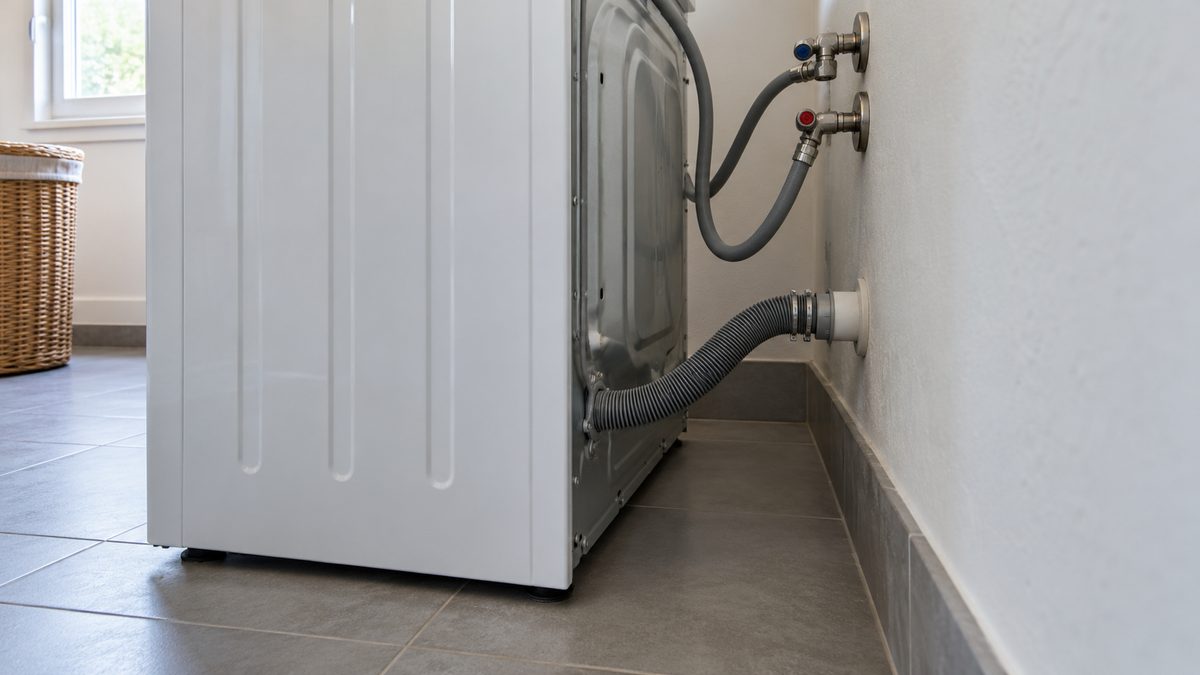
Mice can use the space behind washing machines and dryers for shelter and travel through gaps around pipes or vents. Check the visible floor edges and service openings with appliances off, and stop using a machine if you find chewed cables, damaged hoses or a suspected internal nest. Do not pull a heavy appliance out just to follow a noise.
The source may be a wall opening rather than the machine itself. A laundry area combines concealed space, warmth during use and sometimes moisture, while lint and stored fabric can supply nesting material.
Inspect what you can see before moving anything
Keep the appliances off while looking with a torch. Check beside the feet, along the skirting and around accessible pipe entries. Photograph droppings or shredded material rather than sweeping it away dry. Look at nearby detergent storage, baskets and cupboards without shaking contaminated fabric.
A scratching sound does not establish that a mouse is inside a drum or motor housing. Sounds can travel through a shared wall or floor void. Look for physical signs and note where they appear. Repeated contamination on a cleaned floor helps locate activity more usefully than one brief noise.
If you see exposed wires, smell burning or find water near electrical fittings, keep clear and obtain appropriate help. Do not touch a wet plug or socket. Isolate power only from a safe location if you can do so without approaching the hazard.
Make access a planned job, not a tug on the hose
Washing machines are heavy, and moving them can strain the water supply, waste connection and power cable. Stacked dryers add a stability risk. Consult installation instructions and use an appliance technician when access is tight or the connection arrangement is unclear.
Before any authorised movement, the person doing the work should make the appliance safe according to its instructions. That may involve electrical isolation and water shut-off. A gas dryer requires suitable gas-safety expertise; do not disconnect its supply yourself to investigate rodent signs.
Do not tip a machine while it is connected, remove service panels or put a hand beneath it blindly. Keep the working area clear so a technician can inspect both the appliance and the wall behind it.
Separate entry routes from damage that needs repair
| Finding | Possible significance | Next step |
|---|---|---|
| Gap around a wall pipe | Route through the building fabric | Plan a durable repair that leaves the pipe functional |
| Damaged external dryer vent cover | Possible access through the outlet | Have a compatible cover fitted and airflow checked |
| Chewed power cable | Electrical damage | Leave the appliance unused for professional repair |
| Damaged hose or water staining | Possible leak or weakened connection | Arrange a plumbing or appliance check |
| Nesting material inside a housing | Contamination near working components | Use an appliance technician and pest professional as needed |
Hose damage is not always caused by mice. Age, rubbing and poor installation can also produce problems. The repair decision depends on the condition of the part, rather than proving which animal caused it.
Keep the dryer outlet working as designed
A vented dryer needs an unobstructed exhaust route. Check its accessible outside termination from ground level for a damaged cover, debris and signs of entry. Do not climb or reach into an outlet to investigate a suspected nest.
Avoid adding fine insect mesh, stuffing a duct with wire or blocking an outlet with a temporary plug. Alterations can trap lint and restrict exhaust. Ask an installer to select protection compatible with the dryer and its installation instructions. Condenser and heat-pump models have different arrangements, so identify the machine before assuming there is an outside duct.
Remove lint through the machine's normal maintenance procedure. A slow-drying load or unusual heat calls for an appliance assessment, even when rodent signs are absent. Do not keep running cycles to see if hidden debris will clear itself.
Clean the surrounding floor and sort stored laundry
For droppings, ventilate the area and follow official public health advice. Avoid vacuuming or brushing dry contamination. Wear gloves, use a suitable disinfectant with its stated contact time, and wipe up wetted waste before cleaning the surface. Never spray liquid into a machine's electrical parts.
The guide to cleaning mouse droppings covers surface precautions. Machine interiors need appliance-specific handling. Extensive nesting or contaminated material in an inaccessible cavity is a reason to seek professional cleaning and pest assistance.
Keep suspect textiles separate from clean laundry. Assess what can be laundered safely under its care instructions; badly damaged or uncleanable items may need disposal. Wash hands after handling waste. If illness follows possible rodent exposure, consult a doctor and describe what happened rather than assuming the cause.
Close wall gaps without compromising services
Repair leaks and use suitable, securely fitted materials around service openings. Loose foam alone is vulnerable to chewing. Do not obstruct waste connections, required ventilation or maintenance access. Coordinate exclusion with rodent removal if animals may still occupy the void.
Check the adjoining kitchen and cupboards too. How mice get into a house helps trace the wider route, while mice in kitchen drawers covers nearby food-contact storage.
After cleaning and repairs, keep a dated record of fresh signs along the appliance edges. EchoRepel is poison-free and uses ultrasonic sound that rats and mice want to avoid. It does not repair services or confirm that an appliance is safe to operate.