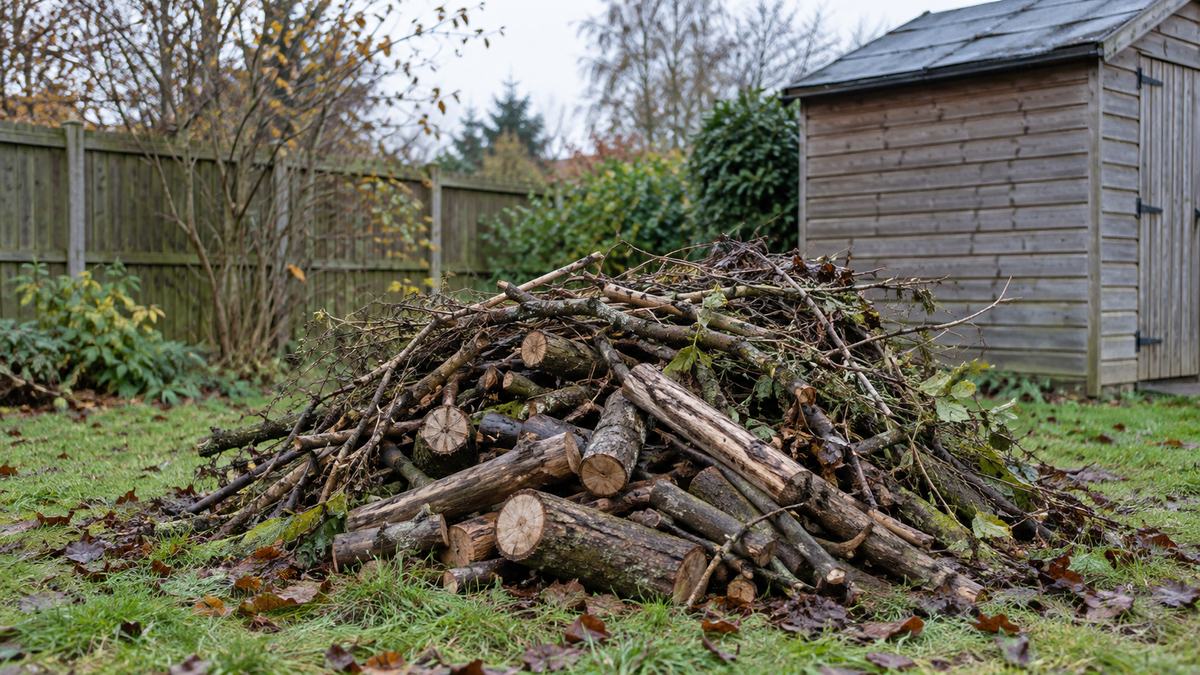
A bonfire wood pile can shelter rodents and other wildlife, so do not light an old, undisturbed heap without checking it. In the UK, Bonfire Night falls on 5 November, but the same precautions apply whenever a garden fire is permitted. Keep stored material separate from the final fire site and check local fire and waste rules before making plans.
A wood heap can become occupied before the event
Gaps between branches and boards offer cover from weather and disturbance. Leaves, bags and soft garden waste around the bottom add concealed spaces. A rat may pass through the heap, while another animal may settle there, so the absence of sightings does not establish that it is empty.
Do not use a fire to deal with suspected rodents. Lighting an occupied pile risks harming wildlife and does not address food, burrows or access to nearby buildings. Arrange a pest inspection separately if you find repeated rodent activity.
A stored pile deserves checking even if it was assembled neatly. For material that will remain after the event, use the storage ideas in keeping firewood without creating rat shelter.
Separate storage from the place you intend to burn
Choose the fire position using current local fire service guidance, considering buildings, fences, trees, overhead obstacles and neighbouring property. Do not invent a safe clearance based on the size of a small unlit heap. Wind and the final size of the fire can change the risk.
Store suitable material so you can inspect around it, rather than wedging it between a shed and fence. Keep the route to the final site clear. Avoid adding food waste, pet bedding or household rubbish to the wood store.
Build the final pile close to the planned lighting time, transferring material carefully from the storage area. This allows a deliberate check as pieces are moved and reduces the time the final pile sits undisturbed. It is still necessary to inspect again before lighting.
Use a deliberate check before anyone brings a flame
- Keep children and pets away and nominate an adult to inspect the pile.
- Look around the base in daylight with a torch for gaps, movement, droppings or gathered bedding.
- Move loose material carefully from the outside, using gloves and suitable handling tools. Do not stab into concealed spaces.
- Transfer wood piece by piece where safe, checking underneath as well as on top.
- If an animal or occupied nest is found, stop and keep the area quiet. Seek local wildlife advice before moving the pile further.
- Recheck the assembled pile just before lighting. Follow fire service instructions and abandon the fire if conditions are unsuitable.
A quick kick at the base or a torch shone over the top cannot check the centre. If the pile is too large, unstable or dense to examine safely, do not treat it as ready to burn.
Respond differently to wildlife and rodent contamination
If you see wildlife, keep dogs away and give the animal space. Do not carry an unfamiliar animal indoors or use smoke to force it out. A local wildlife rescue service can advise on an occupied shelter, injured animals and any restrictions that apply.
Droppings or nesting material need a different pause. Do not shake contaminated material, sweep it dry or vacuum it. For a small accessible clean-up, use gloves and a suitable disinfectant as labelled, then lift wetted waste with disposable towels. Get professional help for extensive contamination.
Fresh signs close to the back door also warrant checking the building. The advice on finding a possible rat nest helps you assess signs without pulling apart concealed spaces.
Keep the gathering from creating another food source
Food and drink around the event can leave a more persistent attraction than the wood itself. Use bins with closing lids and put dropped food straight into them. Do not leave plates or bags beside the back step until morning.
Check the seating area and cooking area after guests leave. Bring pet bowls inside where appropriate and clean spills around outdoor tables. If a communal event uses shared bins, make sure someone is responsible for the final collection.
For the waste side of seasonal gatherings, read managing festive food waste. Keeping the ground clear makes later droppings or fresh digging easier to recognise too.
Deal with unused wood and the cooled fire site
Follow fire service advice on extinguishing and checking the fire. Ash can retain heat, so do not rush it into a plastic bin or shed. Use local disposal guidance once the remains are safe to handle.
Return unburnt, suitable wood to an orderly store rather than leaving a half-collapsed heap all winter. Clear loose leaves and litter from the perimeter. Check whether temporary furniture, tarpaulins or stacked boards now hide the route along the house wall.
If rodents continue to appear after the site is cleared, inspect bins, compost and shed access. Repeated sightings need a wider response, not another fire. A pest professional can assess your property while local wildlife advisers handle any occupied wildlife shelter.