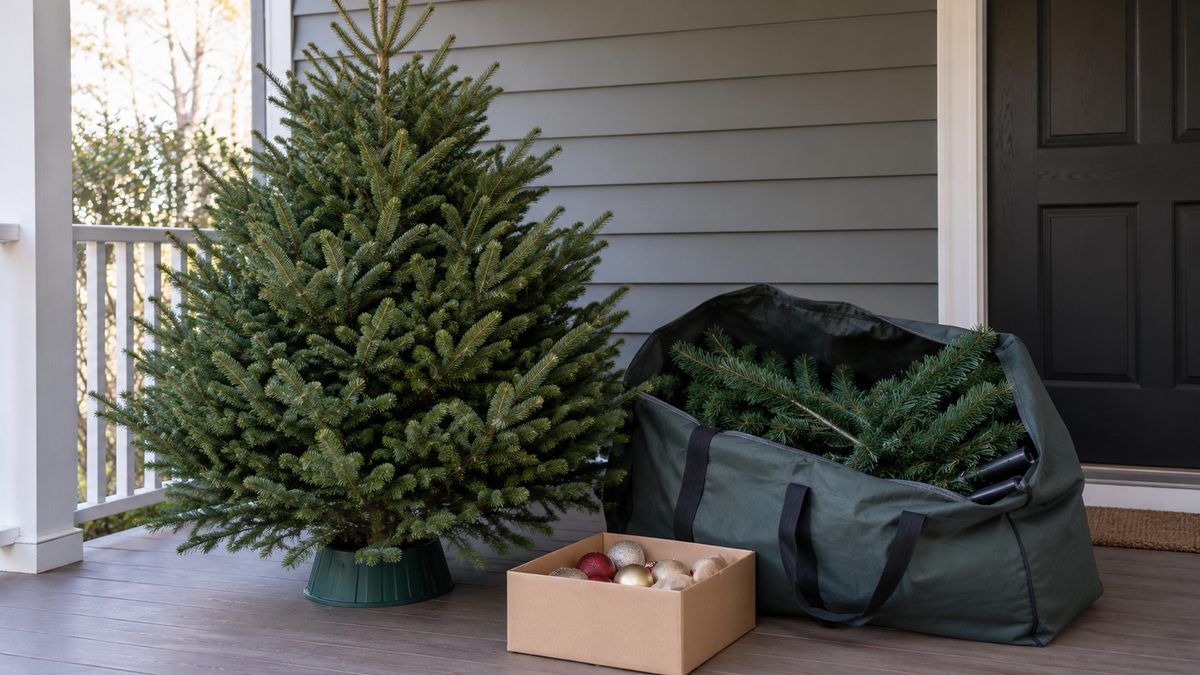
A Christmas tree can bring rodent problems into view, particularly when an artificial tree has spent months in a garage, shed or loft. Check the tree and its packaging before carrying them into a living room. A real tree also deserves a visual inspection, but buying one does not by itself mean rodents will enter your home.
The more common practical concern is undisturbed storage: soft tree bags, cardboard decoration boxes and nearby food or bird seed provide material and shelter. Treat the unpacking area as a checkpoint. It is easier to stop a damaged box at the door than to find debris scattered across the carpet later.
Examine a real tree while it is still outside
In good light, look at the trunk base, lower branches and any outer wrapping. Watch for gathered nesting material or suspected droppings rather than assuming ordinary loose needles mean pests. Wear gloves for handling rough branches and do not put your hands into a concealed pocket of material.
If an animal or nest is present, stop handling and ask the supplier or an appropriate local professional for advice. Avoid shaking suspect contamination towards yourself or other people. A tree waiting outdoors should stand away from open doors and clutter; leaning it against the kitchen entrance makes inspection and movement more awkward.
Open the artificial tree bag before it reaches the sofa
Inspect seams, zips and the underside for chewed openings. Check the floor beneath the bag, then open it slowly in a ventilated, suitable area away from food preparation. Avoid tipping the contents onto a sheet and shaking it, because dry waste may be hidden among the folded branches.
A small tear may have come from a sharp tree fitting, so use surrounding evidence. Shredded padding, droppings and repeated damage to nearby boxes justify a wider storage inspection. The article on mice in stored holiday decorations explains what to check beyond the tree itself.
Sort festive items by condition, not by how much they cost
| Item | Check before use | If there are rodent signs |
|---|---|---|
| Artificial branches and centre pole | Hidden debris, nesting material and damaged fittings | Isolate and assess whether safe cleaning is practical |
| Fabric skirt and soft ornaments | Staining, holes and waste in folds | Use public-health cleaning advice; discard items that cannot be cleaned safely |
| Lights and extension leads | Cable covering, plugs and sockets | Leave unplugged and seek electrical advice about damage |
| Storage cartons | Gnawed corners and contamination inside | Replace affected porous packaging after safe handling |
| Hard ornaments and stand | Crevices and contact surfaces | Clean only with methods compatible with the material |
Do not wash electrical parts or plug in lights just to see whether they still work. A functioning set can still have damaged insulation. Also keep a partly unpacked suspect bag away from children and pets. Attractive ornaments can invite handling before anyone realises why the box has been set aside.
Deal with contamination before decorating
If droppings or nesting material are found, stop dry brushing and vacuuming. Follow current official public-health advice for ventilation, protection and wet cleaning. Choose a disinfectant suitable for the surface and observe its instructions; do not mix chemicals or assume a scented spray disinfects an object.
Intricate artificial foliage and absorbent decorations can be difficult to clean throughout. When contamination is extensive, professional advice or disposal may be more appropriate than trying to rinse every branch. Cleaning mouse droppings safely offers general guidance. Speak to a doctor if illness follows possible rodent exposure.
Keep food decorations out of next year's storage
Edible ornaments, snack crumbs and craft materials containing food should not be packed beside a tree. Check pockets in the tree skirt and the bottom of decoration trays. A forgotten sweet wrapper with residue can matter more than the appearance of the closed cupboard. Remove ordinary food waste promptly during the holiday period too.
Store the clean, dry tree in packaging that fits without forcing sharp branches through the sides. Strong containers with sound lids suit smaller decorations, while a large tree may need a different storage arrangement. A fabric bag alone is not exclusion. The surrounding room still needs checks for entry gaps and nearby food.
Choose a storage place you can inspect next winter
Keep boxes accessible rather than wedged behind furniture or pressed into damaged insulation. Leave enough room to look around their edges. Do not cover vents or electrical equipment, and avoid stacking so high that unpacking requires unsafe lifting. In a loft, use only safe boarded storage and suitable access.
Photograph the packed items and note any building repairs needed before putting them away. The guide to returning decorations to the loft after Christmas gives a storage sequence, while festive food waste and rats covers the bins outside.
If signs recur in the same store, arrange inspection of the building rather than replacing the tree bag each year. The aim is to remove the food and sheltered access supporting repeated visits. When the next holiday season arrives, a checked storage room and intact packaging make the tree inspection a manageable task rather than a last-minute discovery.