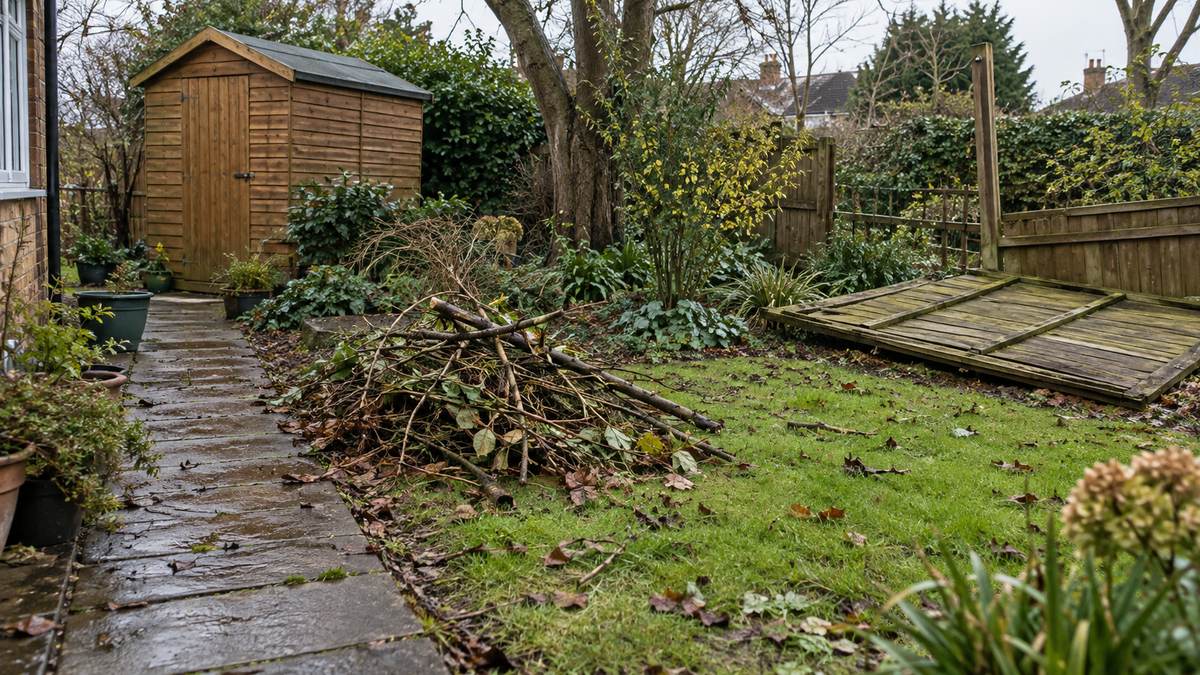
After a heavy storm, clear garden debris in stages, keep salvageable materials away from the house and inspect damaged sheds before putting belongings back. Wet branches, fallen fence panels and sodden boxes can create sheltered spaces for rats if they remain piled together. Deal with structural, electrical and flood hazards before starting rodent checks.
Make the garden safe enough to inspect
Start from a stable, dry position and look across the site. A leaning tree, loose roof sheet or damaged overhead cable needs the appropriate professional, not a closer look with a ladder. Keep children and pets away from standing water, unstable stacks and damaged outbuildings.
If floodwater has entered a shed with electrical equipment or sockets, do not step inside to switch anything on. Arrange an electrical safety check. Floodwater may contain sewage or other contamination, so ordinary garden gloves alone are not a reason to enter it. Follow local authority advice on flood recovery and waste disposal.
Once access is safe, take photographs of the damage and note where water entered. This helps you distinguish storm damage from older holes that may have allowed rodents into the building beforehand.
Sort debris by its next destination
The aim is to avoid creating a new permanent heap while clearing the old one. Choose a sorting area you can see from all sides, away from doors, air bricks and bins. Keep access routes open rather than banking branches along the house wall.
| Material | Practical handling | What to avoid |
|---|---|---|
| Fallen branches | Separate manageable pieces for collection or an orderly wood store | A deep mixed heap against the shed |
| Fence panels | Secure sound panels in a stable temporary position pending repair | Leaning unstable panels over paths or vents |
| Wet cardboard and fabric | Assess contamination and dispose of unsuitable material through local arrangements | Drying damaged boxes in an occupied room |
| Reusable tools and containers | Clean as appropriate, dry and inspect before storing | Returning everything to a damp, unexamined corner |
Do not burn contaminated waste or put unknown chemicals into garden compost. If material contains suspected rodent droppings, stop sorting it as ordinary clean waste and plan a controlled clean-up instead.
Inspect the flooded shed before restocking
Open the door from outside once the building is safe. Look with a torch along the floor edges, under shelving and around pipe or cable entries. Shredded packaging, droppings and gnawed bags deserve attention, but flood silt by itself does not prove rodents have arrived.
Do not sweep or vacuum suspected droppings or nests. Avoid raising dust. For a small, accessible area, wear gloves, use a suitable disinfectant according to its label and lift wetted material with disposable towels. Bag the waste and follow local disposal guidance. Extensive contamination or sewage flooding needs specialist advice.
Our guide to cleaning a shed after mice explains the rodent clean-up stage. Keep this separate from drying flood-damaged building materials, which may require a contractor.
Repair openings without trapping animals inside
Check lifted roof edges, loosened cladding and damaged door bottoms. A fallen fence changes garden cover, but it is not a sealed barrier against rats even when repaired. The building envelope matters more than trying to exclude every animal from the garden.
Before closing an opening with signs of use, ask a pest professional to assess activity inside. Blocking the only route while rodents remain in a wall or shed can move the problem elsewhere. Repairs must also preserve intended drainage and ventilation.
Use sound, weather-suitable materials for damaged building edges. Foam alone is not a dependable repair where rodents are gnawing. The steps in winter shed proofing help turn temporary storm repairs into a planned job.
Remove the food that the storm scattered
Check overturned bins, split pet food sacks and fallen fruit before concentrating on deterrents. Collect accessible food waste in a container with a secure lid. Clean spills beneath bins rather than just standing the bins upright again.
Inspect compost areas without dismantling an unstable heap. Replace damaged lids and keep kitchen scraps contained. If neighbours share a bin store, report broken enclosures to the person responsible so the food supply is addressed across the whole area.
For wider signs around the boundary, read dealing with rats in the garden. A clear garden is useful, but nearby food can keep attracting visits even after your own debris has gone.
Revisit the cleared places after the first tidy-up
Take another look after stored items have dried and moved back onto shelves. Check the floor beneath them, the repaired door edge and the route between the bins and shed. Compare new marks with your earlier photographs rather than guessing how old they are.
Fresh droppings, repeated sightings or renewed gnawing justify a pest inspection. Tell the professional which areas flooded and which openings were repaired. That information is more useful than assuming the storm caused every sign you find.